How to choose an engagement ring: 7 principles that make the difference.
When a customer comes to us to choose an engagement ring, we know this is no ordinary purchase. Every story is different, and our task is to understand which ring will genuinely suit the person who will wear it. We explore the options with our client and find a design that makes sense visually, in the long term and in terms of value. So when the proposal arrives, only the most important words remain.
How to choose an engagement ring: 7 principles that make the difference.
Principle 1 — Respect her style, not your own expectations
An engagement ring is not about what you like, but what will feel natural to her.
Look at:
what jewellery she wears every day
whether she prefers delicate or more striking pieces
which metal she prefers
The ring should fit into her life, not feel out of place. If you wish, we can create a design detail that belongs to her alone.
Principle 2 — Choose the material for how you actually wear it
Every metal and alloy has its own properties — it is not just about colour.
Consider:
how often the ring will be worn
contact with water, work and sport
willingness to maintain it
The right material means the ring will still serve you well years later.
Main engagement-ring materials and their characteristics:
Yellow gold → lasting colour, natural character, less demanding maintenance
White gold → a neutral appearance; rhodium-plated pieces may need their surface coating renewed, depending on wear
Rose gold → a soft pink tone; durability depends on the specific alloy and workmanship, not simply on the colour of the gold
Platinum → Stable colour, beautiful character, hardness very similar to white gold. Greater toughness. Higher weight and price.
Principle No. 3 — Choose a gemstone for its character and durability
Diamond is a traditional choice, but far from the only one. Each gemstone differs not only in appearance and value, but also in its durability for everyday wear.
Diamond (10 Mohs) → highly resistant to scratching, but an impact can chip it; even a diamond needs an appropriate setting and careful handling
Sapphire (9 Mohs) → Very durable, suited to an active lifestyle — available in various shades of many colours
Ruby (9 Mohs) → As hard as sapphire, with a more distinctive colour character — traditionally available in shades of red
Emerald (7.5–8 Mohs) → a hardness of 7.5–8 does not imply impact resistance. Fractures and their fillers may require particular care; suitability for an everyday ring depends on the individual stone and setting.
Aquamarine (7.5–8 Mohs) → A light-blue tone and a more delicate appearance
Morganite (7.5–8 Mohs) → A pink shade, often paired with rose gold
Tourmaline (7–7.5 Mohs) → a wide range of colours, better suited to less intensive wear
Origin, colour, clarity, cut and carat weight are explained in our diamond guide. It will help you compare individual offers.
Hardness describes resistance to scratching. Toughness is resistance to breaking and chipping; stability under heat and exposure to chemicals is a separate property. We therefore consider not just a number on the Mohs scale, but the particular stone, its treatments, setting and intended wear.
It is therefore not just about how the stone looks when you choose it, but how it will perform after years of wear.
Principle 4 — A stone's setting is more than a visual detail. It affects security, comfort and everyday practicality.
Claw setting (solitaire) → Maximum light for the stone, but a greater tendency to catch
Bezel setting → the stone is protected, suitable for an active lifestyle
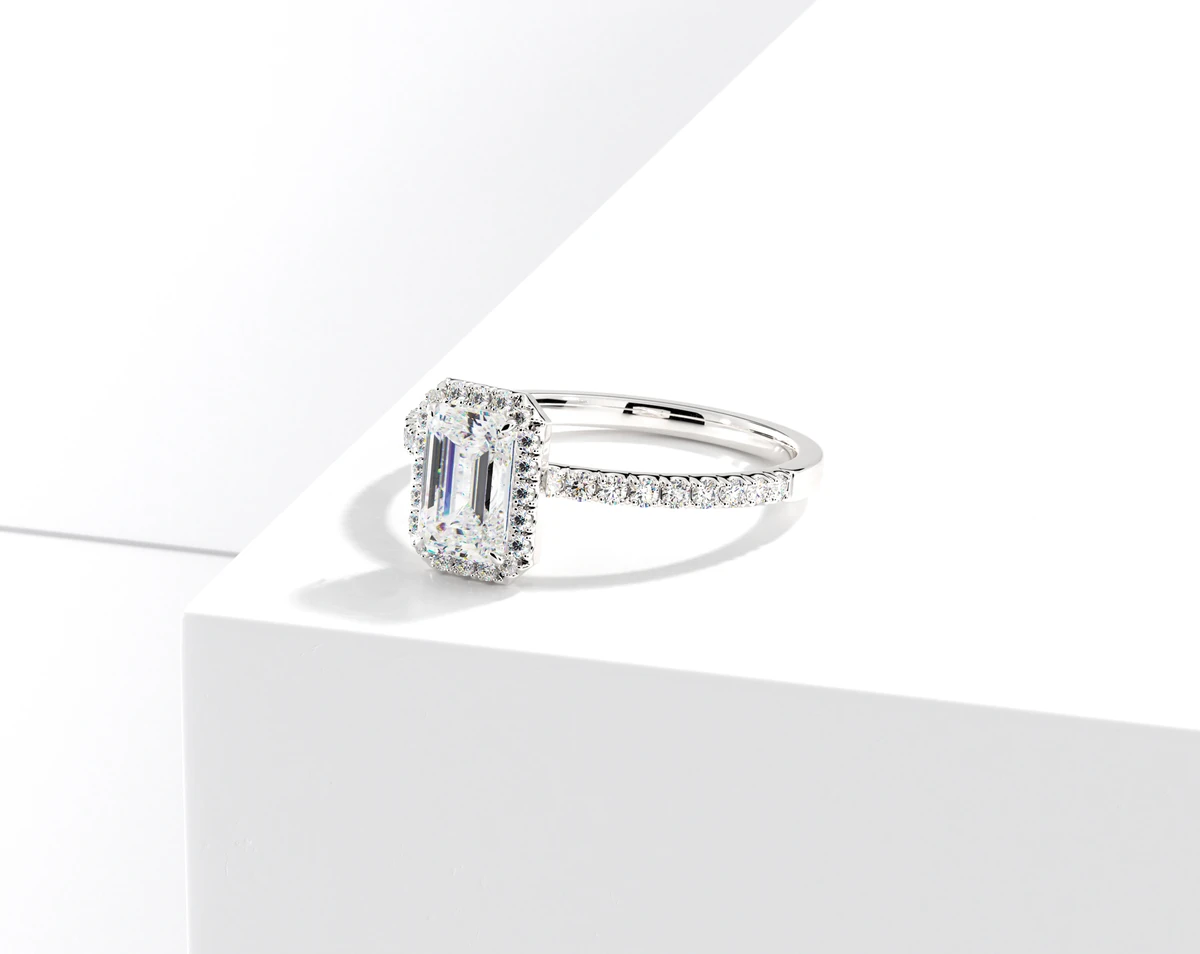
Halo → Makes the central stone appear larger. The crown is set with smaller side stones, creating a more striking, luxurious appearance.
What matters:
how high the stone is set
how it is protected against impact
whether the ring gets in the way during everyday activities
A design should work not only at handover, but above all when worn. At DeLoire we may focus on details, but we believe they make the difference.
Principle 5 — Choosing the right size
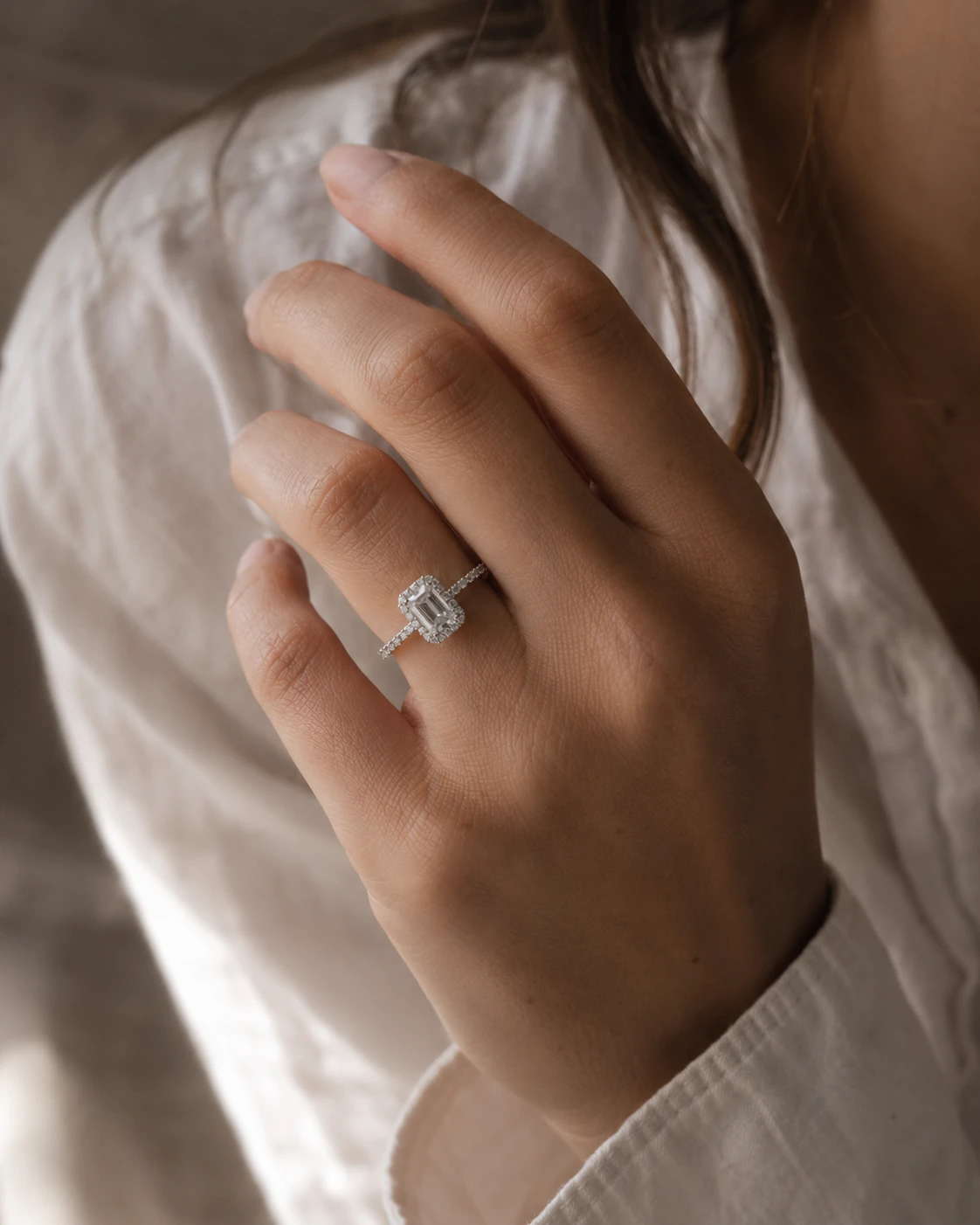
A ring that does not fit can disrupt even a perfectly prepared proposal. Ideally, when you put it on, the ring should:
- passes over the knuckle with slight resistance, but without pain
fits securely without feeling tight
does not feel unstable when moving
How to find the size:
use a ring she already wears
ask someone close to you for advice
- check the size and resizing options for the particular design with us in advance
Whether and how far a ring can be resized depends on its construction and setting. Do not automatically choose a larger size; for a surprise proposal, first discuss with us measurement and the particular design.
Principle 6 — Think about the ring's future
An engagement ring almost always becomes part of a pair with a wedding ring.
That is why it makes sense to consider at the outset:
how the shapes of the rings will fit together
whether they can be worn comfortably side by side
whether they complement each other visually
Problems arise when an engagement ring is too prominent or structurally complex — the wedding ring then has to give way or adapt.
Ideally, consider both rings as a pair, rather than as two separate choices.
Principle 7 — Choose a ring that stands up to everyday wear
In our view, an engagement ring is not jewellery for special occasions, but an object worn every day.
It should therefore:
feel comfortable during everyday activities
withstand wear
not get in the way of work or movement
Following these simple principles when choosing will greatly improve your chances of making the right choice. The 'three months' salary' rule is a marketing myth with no basis in reality. The ring's price should primarily reflect your circumstances and preferences, which we always respect. An engagement ring has value — in its meaning, materials and craftsmanship alike. With the right choice, it can be a piece that retains its value over the long term.
Radim & Michaela