
How to choose a sapphire ring: colour, treatments and the right questions
The most beautiful sapphire for your ring is not necessarily the darkest or the one with the highest carat weight. What matters is how it looks on your hand, how it fits your style and what you actually know about the particular stone.
Start with colour. Then check the stone’s origin, any treatments and its documentation. This guide helps you prepare questions before buying; it does not replace an assessment of an individual sapphire.
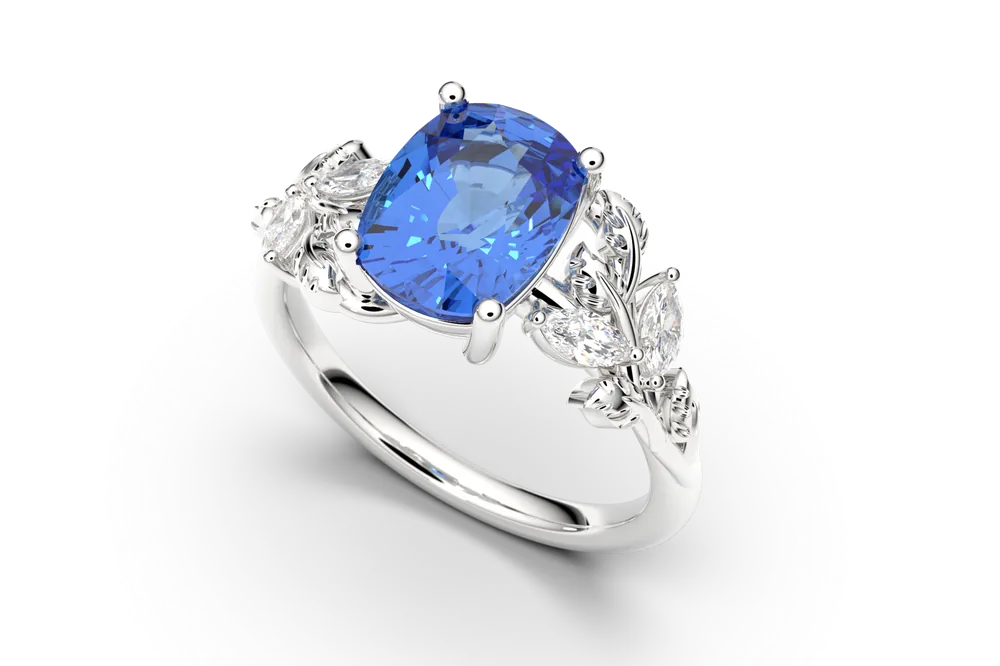
Sapphire is not only blue
Sapphire belongs to the corundum family. As well as blue, it can be pink, yellow or green, for example; red corundum is called ruby.
First decide whether you want a striking blue, a softer tone or an entirely different colour accent. Photographs can help you make an initial selection, but cannot decide which stone feels right for you.
Three colours, one gemstone
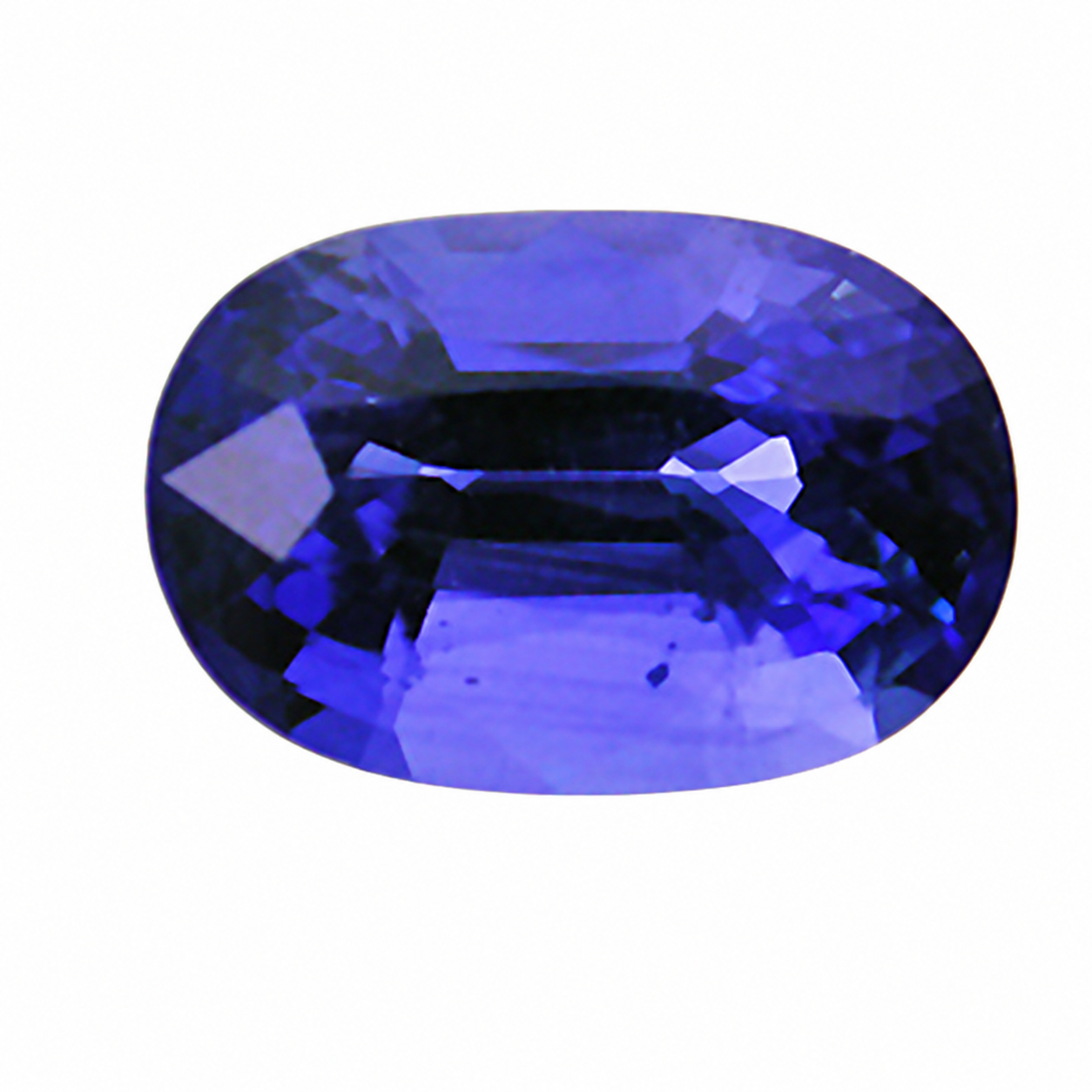
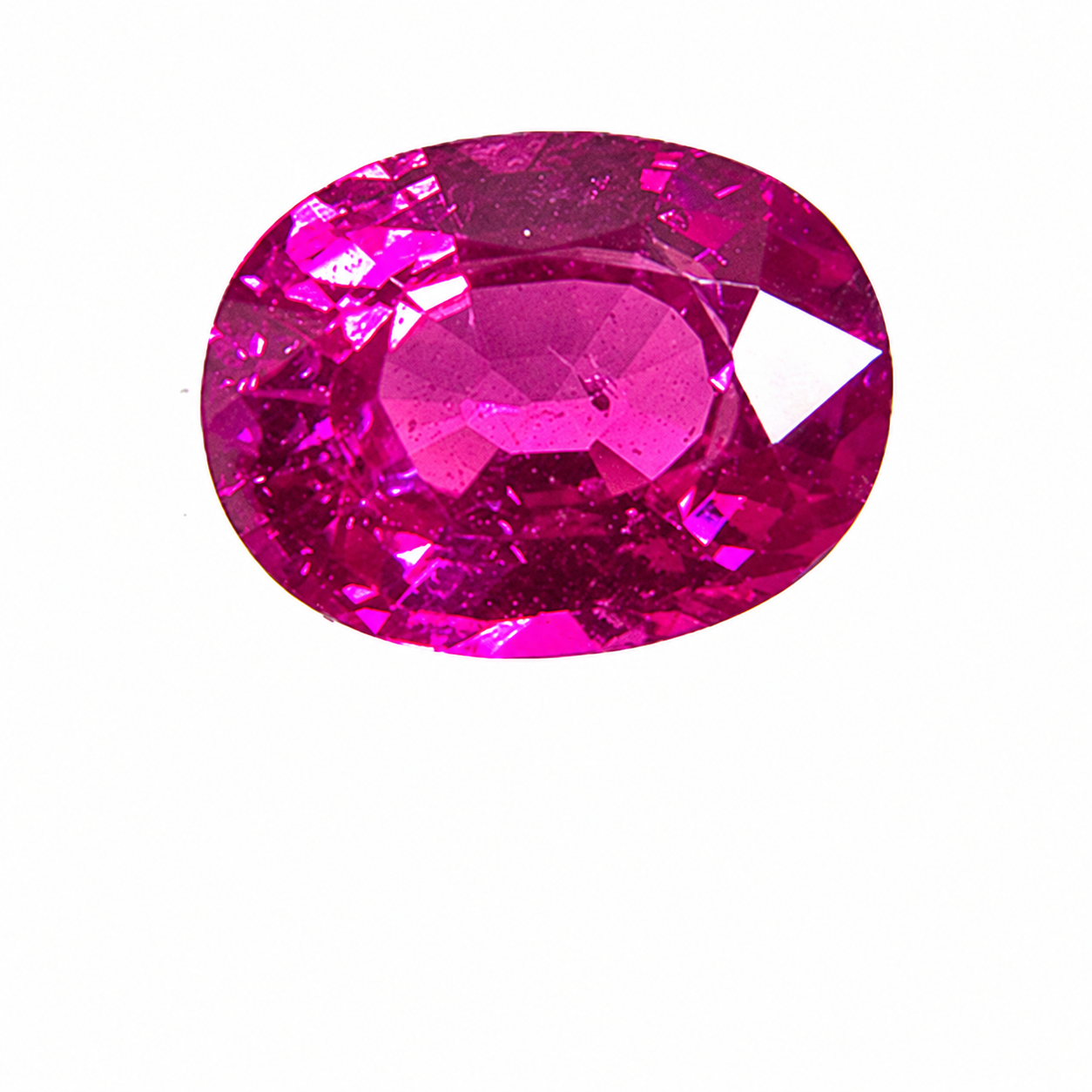
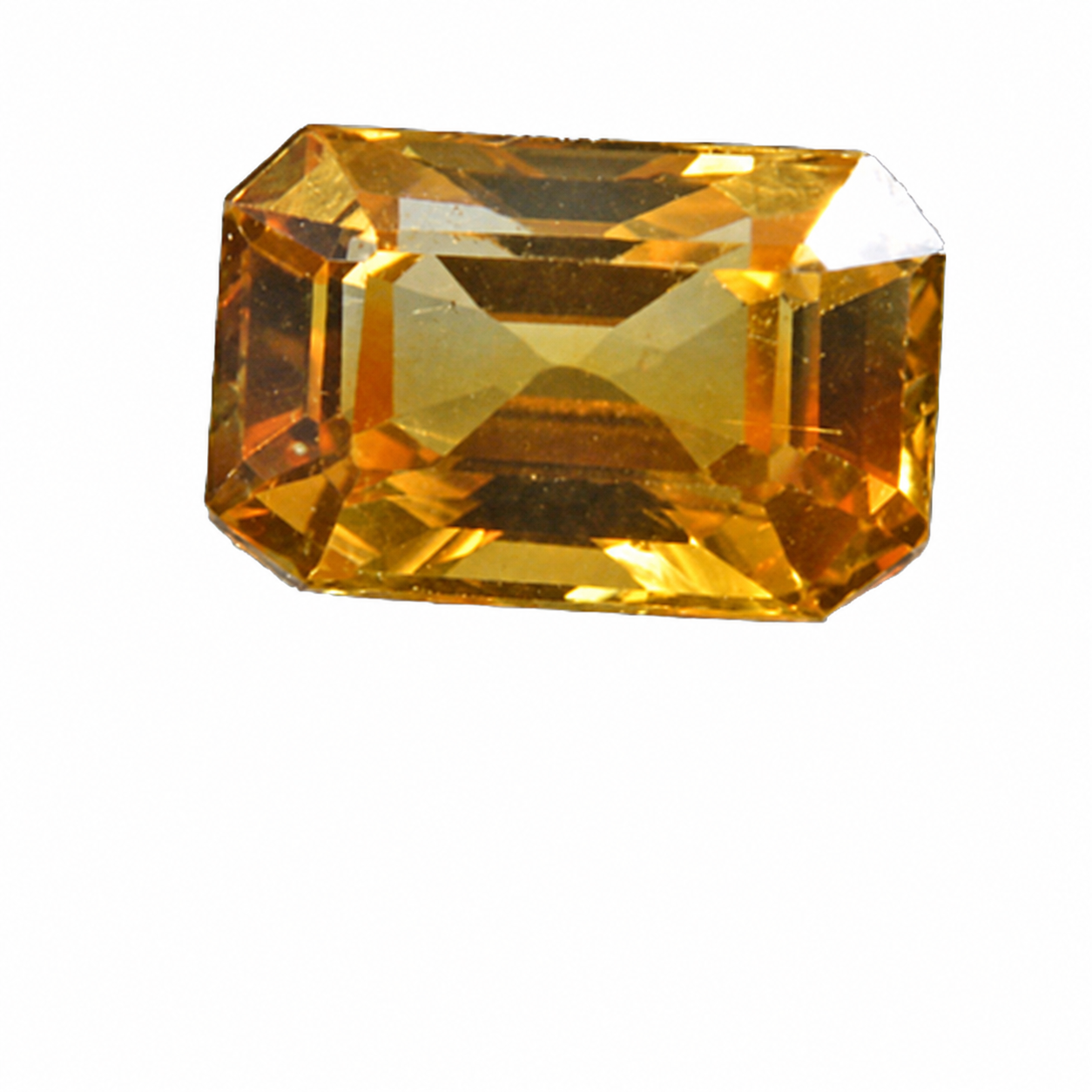
These photographs of real sapphires show their colour range, not stones offered by DeLoire. Reflections below the stones have been retouched using AI. Photography and display settings affect the shades you see on screen.
Photography: Wiener Edelstein Zentrum · CC BY-SA 3.0
Why we love sapphires at DeLoire
We love sapphires for their beauty and remarkable versatility. They can feel calm and elegant, or playful and bold. That range of colour is what makes them magical to us: the same gemstone can give a piece of jewellery an entirely different character.
We recommend sapphires as a beautiful choice for both engagement rings and wedding bands. We love a striking centre stone as much as a delicate row of coloured sapphires around a band. For an everyday ring, however, a suitable setting and protection for the stones matter just as much as colour.
Colour: look beyond the darkest blue
When comparing blue sapphires, consider saturation and lightness or darkness as well as hue. A very dark stone can make its colour harder to appreciate. The intensity of the blue is not the only guide.
You can choose using the photographs and information available for a particular design; viewing the stone in person before ordering is not always possible. Lighting, exposure and display settings all affect the impression of colour. Two photographs taken under different conditions are therefore not an exact colour comparison.
Consider the overall colour combination and proportions of the jewellery. Where available, compare the same design in different gold colours and choose a combination you will enjoy returning to. Clarify anything the description or photographs leave unclear using the available information for the selected version.
Rare blue hues: cornflower blue and royal blue
The most prized blue sapphires have richly saturated, velvety blue to slightly violetish-blue colour in medium to medium-dark tones. For fine stones, documented absence of heat treatment adds to rarity.
Cornflower blue is sought after for its soft, velvety blue appearance. Kashmir sapphires are particularly famous in this context, but the colour name alone does not establish a stone’s origin.
Royal blue is an intensely saturated blue, either pure or with a very slight violet tint. When SSEF and Gübelin use this designation on their reports, they assess further strict quality criteria and the absence of treatments, not colour alone.
These names are not a universal ranking of rarity. A label alone cannot compare two stones: size, transparency, treatments and documented origin also matter. A cornflower-blue sapphire is therefore not automatically rarer than a royal-blue one, or vice versa.
Natural, synthetic and imitation: three different things
A natural sapphire formed in nature. A synthetic sapphire is laboratory-created corundum; blue glass imitating sapphire, for example, is a different material. Blue colour alone does not establish a stone’s identity or origin.
Before ordering, ask for a precise description of the setting. If the description does not say whether the stone is natural or synthetic, that is a question to clarify, not an invitation to assume the answer.
Be cautious about “recrystallized” sapphires
At DeLoire, we recommend caution with the term “recrystallized sapphire”. It does not, by itself, mean you are buying a natural stone. A gemmological study also identified synthetic corundum sold under this name.
If feedstock is crushed, melted and grown into a new crystal under controlled laboratory conditions, the result is not the original natural sapphire — even if the feedstock came from natural stones. Subsequent cutting does not change this. This process is not the same as ordinary heat treatment of a natural crystal. A particular manufacturing story needs evidence, not simply repetition from a listing.
Synthetic sapphire is human-made corundum with essentially the same chemical composition and crystal structure as natural sapphire. It is therefore not correct to automatically call it a simulant: a simulant imitates sapphire using a different material, such as blue glass.
Our advice: before buying, ask for a clear material description, whether the stone formed naturally or synthetically, and information about treatments. If natural formation matters to you, an independent gemmological laboratory can examine this; a photograph or marketing name alone is not enough.
Where sapphires come from: Sri Lanka and other sources
Sri Lanka, also known by its historical name Ceylon, is a traditional and important source of sapphires. Other deposits include Madagascar, Australia, Myanmar, Tanzania and Thailand.
To us, Sri Lankan sapphires are a beautiful classic we love returning to. A country of origin does not, however, guarantee every stone’s quality. The individual sapphire, its colour, cut and available documentation are what matter. This general overview of deposits does not establish the origin of individual DeLoire stones.
Natural does not automatically mean untreated
Heat treatment is common in sapphires. It is not the same as growing a stone in a laboratory. Diffusion treatment and fracture filling are different processes; the vague word “treated” does not explain which has been used.
Ask which treatments have been identified and what supports that information. If you want a conclusion of “no indications of heating”, request it in a report from an independent laboratory.
Being untreated does not replace colour and overall appearance. Do not choose a stone on the strength of one word in a listing. Equally, do not assume that an empty field confirms the absence of treatments.
Cut, clarity and dimensions: consider the whole ring
Sapphire can contain inclusions and colour zoning. Their significance depends on the individual stone, not simply on whether they are present. Cutting affects how colour and light appear as the stone moves.
When comparing stones, ask for dimensions in millimetres as well as carat weight. On the hand, consider the proportions of the whole ring, the height of the setting and whether its shape suits you. For a multi-stone design, distinguish the weight of the main sapphire from the combined weight of all stones.
What should the documentation tell you?
A gemmological report can identify the material and list detected treatments. Determining geographic origin is a separate expert question and is not necessarily included in every report. The general term “certificate” is therefore not enough.
Check the issuing laboratory, document number and whether the details match the stone offered. Use the laboratory’s online verification where available. Do not automatically treat an identification report as a valuation or a promise of future resale value.
For a particular DeLoire design, always check which documents are available for its stones. This article does not mean that every sapphire offered has an individual GIA or SSEF report.
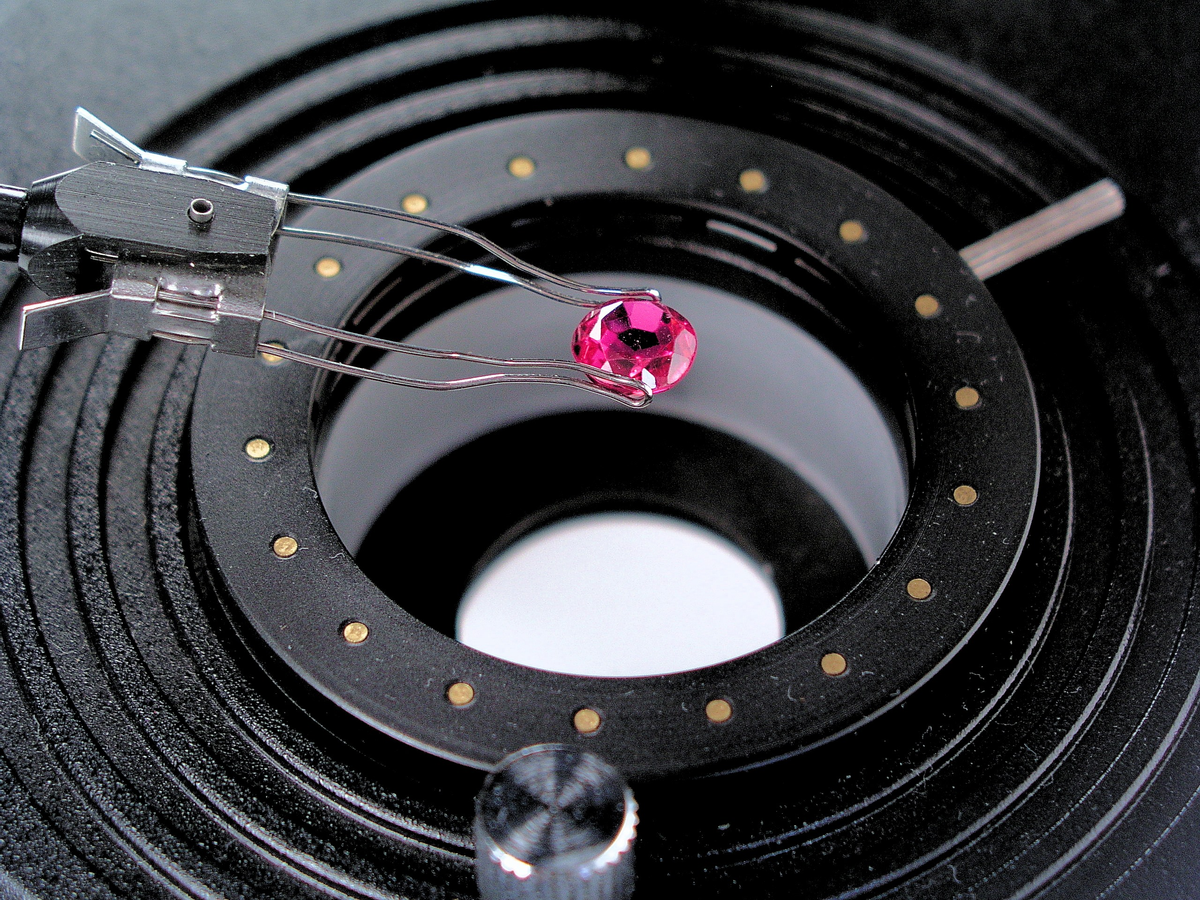
Photography: Sara Abey · CC BY-SA 4.0 · Unmodified
Is sapphire suitable for an engagement ring?
Sapphire has a Mohs hardness of 9 and can be suitable for an everyday ring. Hardness does not mean indestructibility; the stone’s condition, any treatments and the construction of the jewellery also matter.
Remove your ring before sport and manual work. Ask for cleaning advice for its particular stones, especially if they are filled or have other sensitive treatments. Do not use ultrasonic or steam cleaning without knowing the treatments. Our jewellery care guide explains further practical steps.
Five questions before ordering
- Is the stated setting natural sapphire, synthetic sapphire or another material?
- Which treatments are documented, and what information is still missing?
- What are the main stone’s dimensions and weight, and which details refer to the accompanying stones?
- Which photographs and information are available for the selected version?
- Which documentation, care advice and servicing options apply to this particular ring?
Sapphire rings in the Aurora collection
DeLoire’s current public catalogue lists natural sapphires in AURORA-1 and AURORA-2. AURORA-14 combines a natural sapphire with natural diamonds.
Open a particular design and compare its options. Exact prices, available choices and current specifications belong on the product page; we do not repeat them in the article, where they could become outdated. The description “natural sapphire” alone does not establish geographic origin or treatment status.
Ring AURORA-14
Natural sapphire and natural diamonds
View design →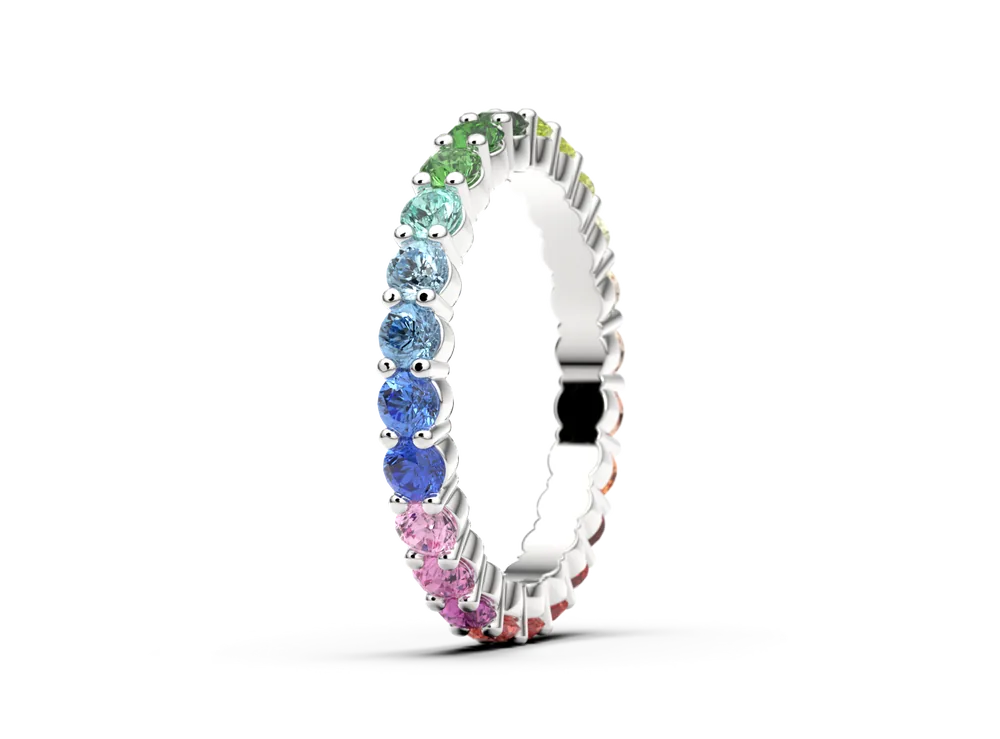
Ring AURORA-1
Natural sapphires
View design →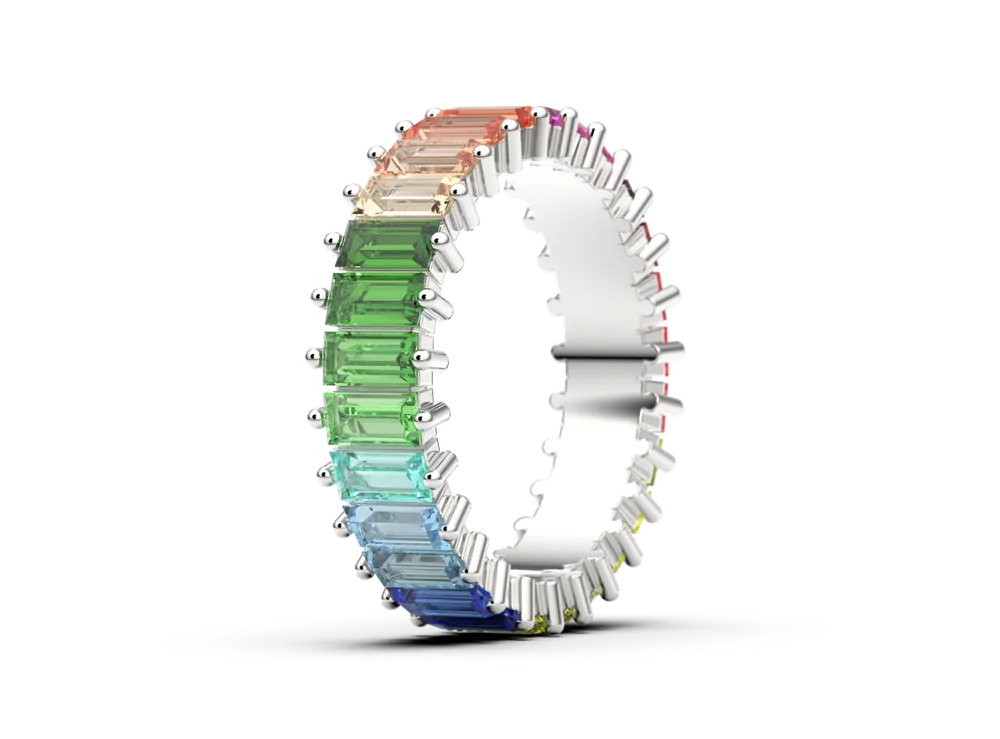
Ring AURORA-2
Natural sapphires
View design →The complete Aurora collection
Expert sources · Photography
These sources support general information about sapphires, not an assessment of individual DeLoire gemstones.
- GIA · Sapphire
- GIA · Sapphire Quality Factors
- GIA · Sapphire and Synthetic Sapphire
- GIA · Sapphire Buyer's Guide
- GIA · Colored Stone Reports & Services
- SSEF · Sapphire Reports
- GIA · Sapphire Care and Cleaning
- GIA · Sapphire Buyer's Guide (PDF)
- GIA · Education Quarterly, Summer 2018 · Sapphire (PDF)
- SSEF & Gübelin · Royal Blue Standards (2015, PDF)
- GIA · Sapphire History and Sources
- Journal of Gems & Gemmology · Recrystallized (Synthetic) Corundum (2020)
- GIA · Laboratory Growth of Gem Materials (2024)
- GIA · Simulants and Imitation Gem Materials
- CIBJO · Gemstone Book, definitions (2022, PDF)
Photography
- Sapphire oval 1.98cts.jpg — Wiener Edelstein Zentrum / Wikimedia Commons — CC BY-SA 3.0 — Adapted for DeLoire: mirror reflection below the gemstone removed using AI
- Sapphire pink oval 1.90cts.jpg — Wiener Edelstein Zentrum / Wikimedia Commons — CC BY-SA 3.0 — Adapted for DeLoire: mirror reflection below the gemstone removed using AI
- Yellow sapphire, emerald cut, 0.89cts.jpg — Wiener Edelstein Zentrum / Wikimedia Commons — CC BY-SA 3.0 — Adapted for DeLoire: mirror reflection below the gemstone removed using AI
- Gemmological microscopic examination.jpg — Sara Abey / Wikimedia Commons — CC BY-SA 4.0 — Unmodified


