Emerald — a gemstone that does not pretend to be perfect
If we were to choose a gemstone with the strongest character, emerald would be among the first candidates. Its rich green colour has fascinated people for thousands of years, yet it differs from most gemstones in one fundamental respect — perfect clarity is not the aim here.
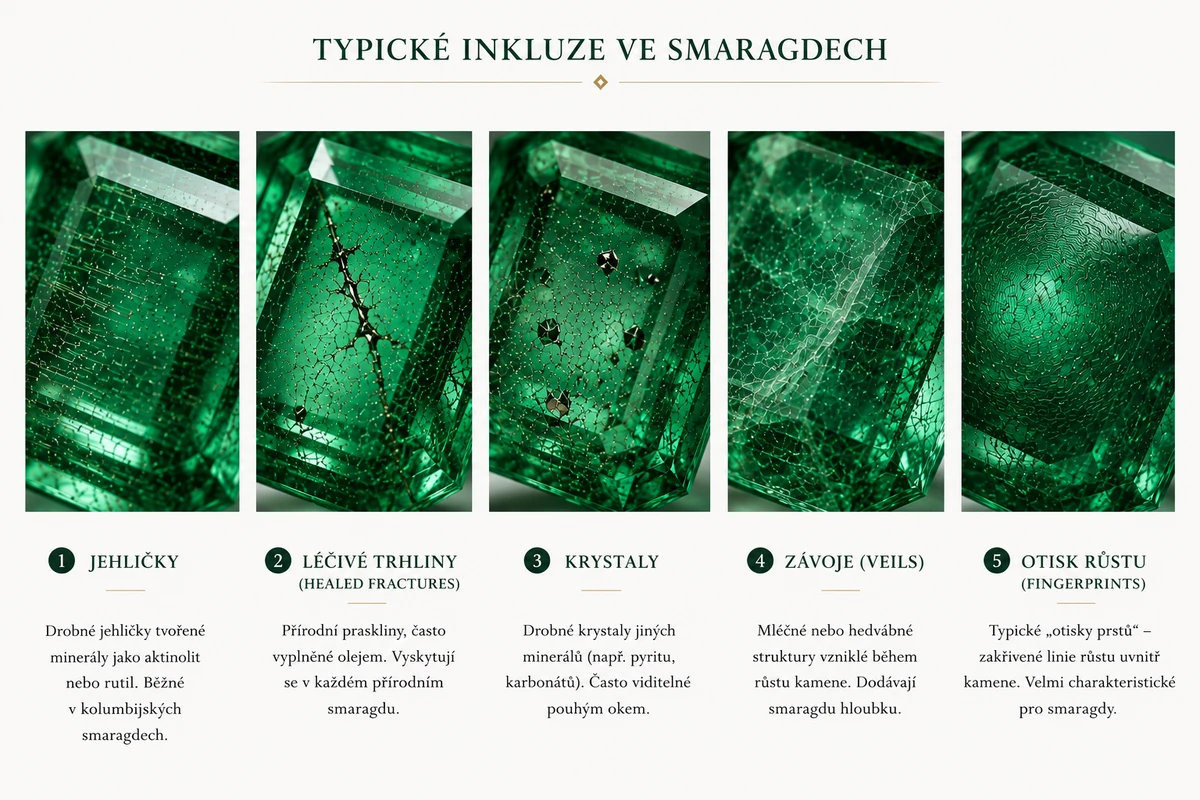
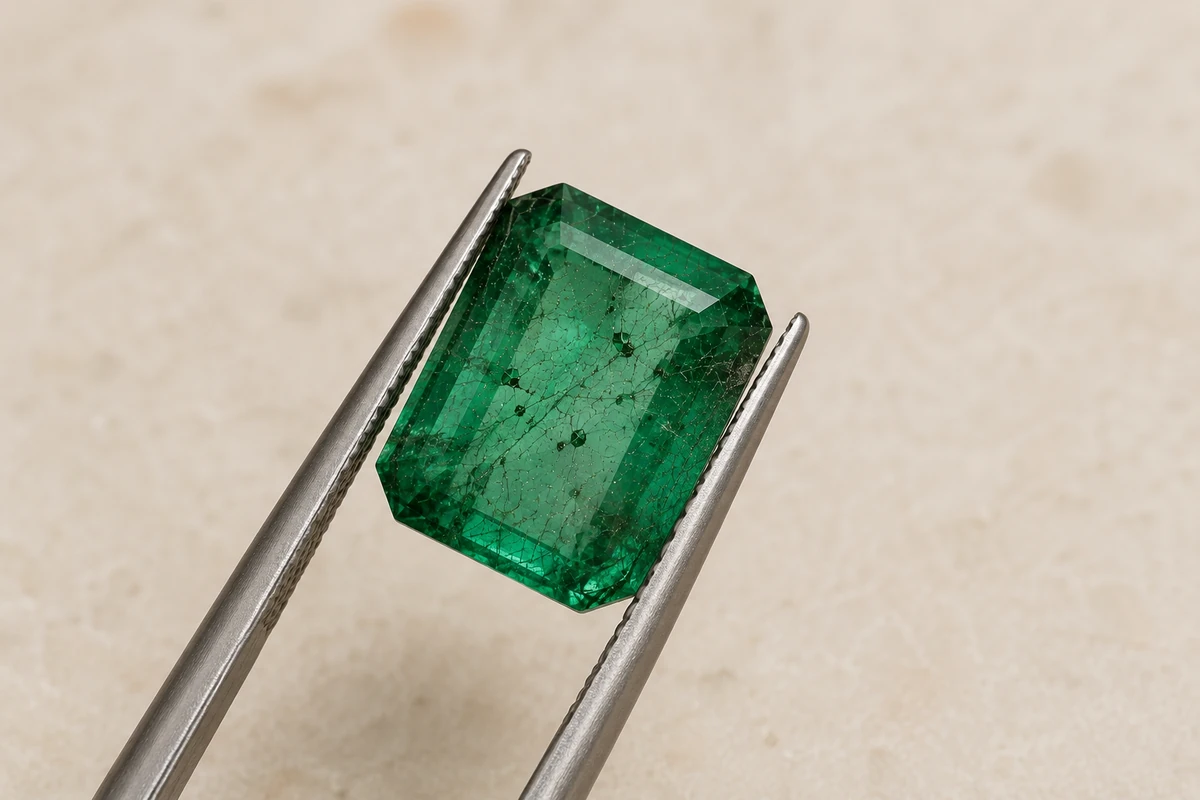
Quite the opposite. Most natural emeralds contain small internal inclusions and fissures, often known as zahrada (jardin). These are evidence of the stone's natural formation and give every emerald a unique character — precisely why customers seek them out.
In our experience, customers often worry about small inclusions because they compare emeralds with diamonds. Emeralds follow somewhat different rules — quality and colour characteristics matter more than absolute clarity.

Where are the finest emeralds mined?
The most famous emeralds come from Kolumbie, which is still considered the source of the world's most valuable stones. Colombian emeralds are known for their vivid, rich green colour and exceptional radiance.
Zambia is another significant producer, with emeralds that have a slightly cooler, sometimes bluish tone. Other sources include Brazil, Ethiopia and Afghanistan, where we believe very beautiful emeralds can also be found. Origin has long had a strong influence on market prices.
What colours can emeralds have?
Although most people picture only a dark-green stone, the range of emerald colours is surprisingly broad.
light-green emeralds,
medium-green emeralds,
deep, richly green emeralds,
green stones with a subtle blue tint,
green stones with a yellowish undertone.
The most valuable emeralds tend to have a rich, even green colour that is neither too dark nor too light.
Emerald advantages
1) Unique colour
No other gemstone offers exactly this shade of green. A fine emerald is recognisable at first sight.
2) Every stone is unique
Natural inclusions mean no two emeralds are exactly alike.
3) History and rarity
Emeralds are among the rarest gemstones and have symbolised wealth and status for centuries.
Emerald drawbacks you should know about
1) Brittleness and cleavage
Emerald is not an especially hard gemstone. It belongs to the beryl family, with a hardness of 7.5 on the Mohs scale. Its natural internal structures can make it more sensitive to impact. We therefore recommend considerable care, particularly with rings worn every day.
2) Most emeralds are treated
The vast majority of natural emeralds on the market are oiled to fill small surface fractures and improve the stone's appearance. This is not fraud, but a common treatment with a long history of acceptance.
How much does an emerald cost?
The price of a single emerald can range from a few thousand to hundreds of thousands of Czech crowns.
The main considerations are:
the intensity and quality of the green colour,
stone clarity,
carat weight,
the emerald's origin,
kvalita brusu,
any treatments.
For example, a beautiful natural emerald of around 1 carat may cost approximately CZK 60,000–90,000 and upwards; exceptional stones can cost significantly more.
How to choose a fine emerald — our advice
At DeLoire, we have a rule: colour should come first. An emerald with a beautiful, vibrant green colour will ultimately look more valuable than an exceptionally clear stone with an unremarkable hue. In our selection, we always try to avoid milky veils, which often indicate a lower-quality gemstone.
We also recommend checking whether the stone is natural and what treatments it has received. A gemmological certificate should be standard for more expensive emeralds. Emeralds are often treated with cedar oil. This is regarded as a routine treatment to achieve a richer colour. The extent of oil filling is also important. The oil can dry out and deteriorate over time, so older emeralds may be re-oiled. Resin, water glass and other silicate fillings are more problematic: these treatments reduce the stone's value to a minimum.
Our view on emeralds
Emerald is not a gemstone for someone seeking absolute technical perfection. It is a stone for those who appreciate its natural origin, distinctive inclusions and inimitable green colour. Chosen well, an emerald can be one of the most characterful gemstones in a piece of jewellery. When designing an engagement ring, I always try to explain clearly that this gemstone is not particularly well suited to a ring intended for daily wear. Stones in rings are exposed to much greater stresses from changes in temperature, abrasion and chemicals. With careful handling, however, no other gemstone can match an emerald's green colour. Our suppliers around the world provide emeralds, and we can source a wide range of cuts, colour tones and clarities.
Radim & Michaela