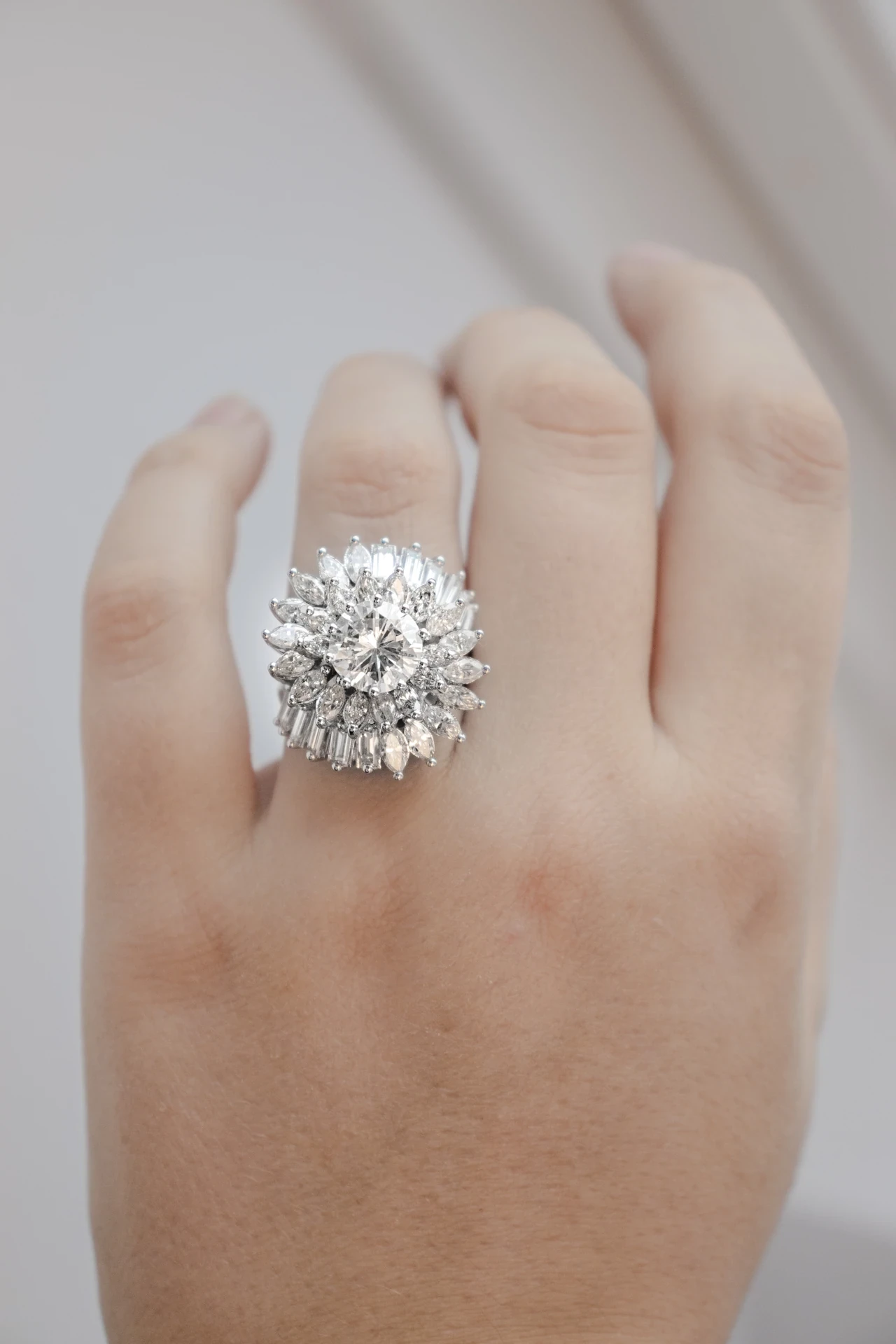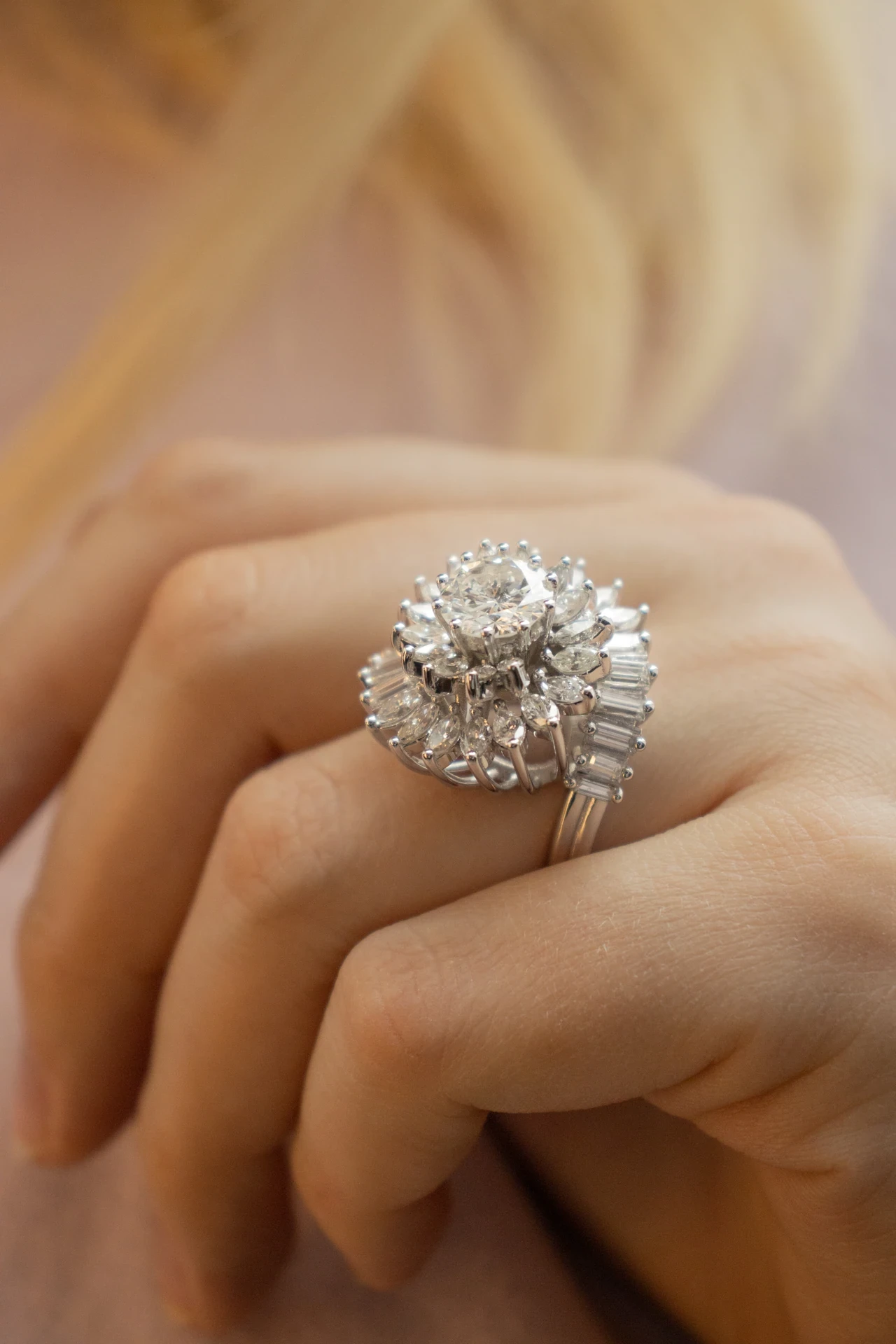
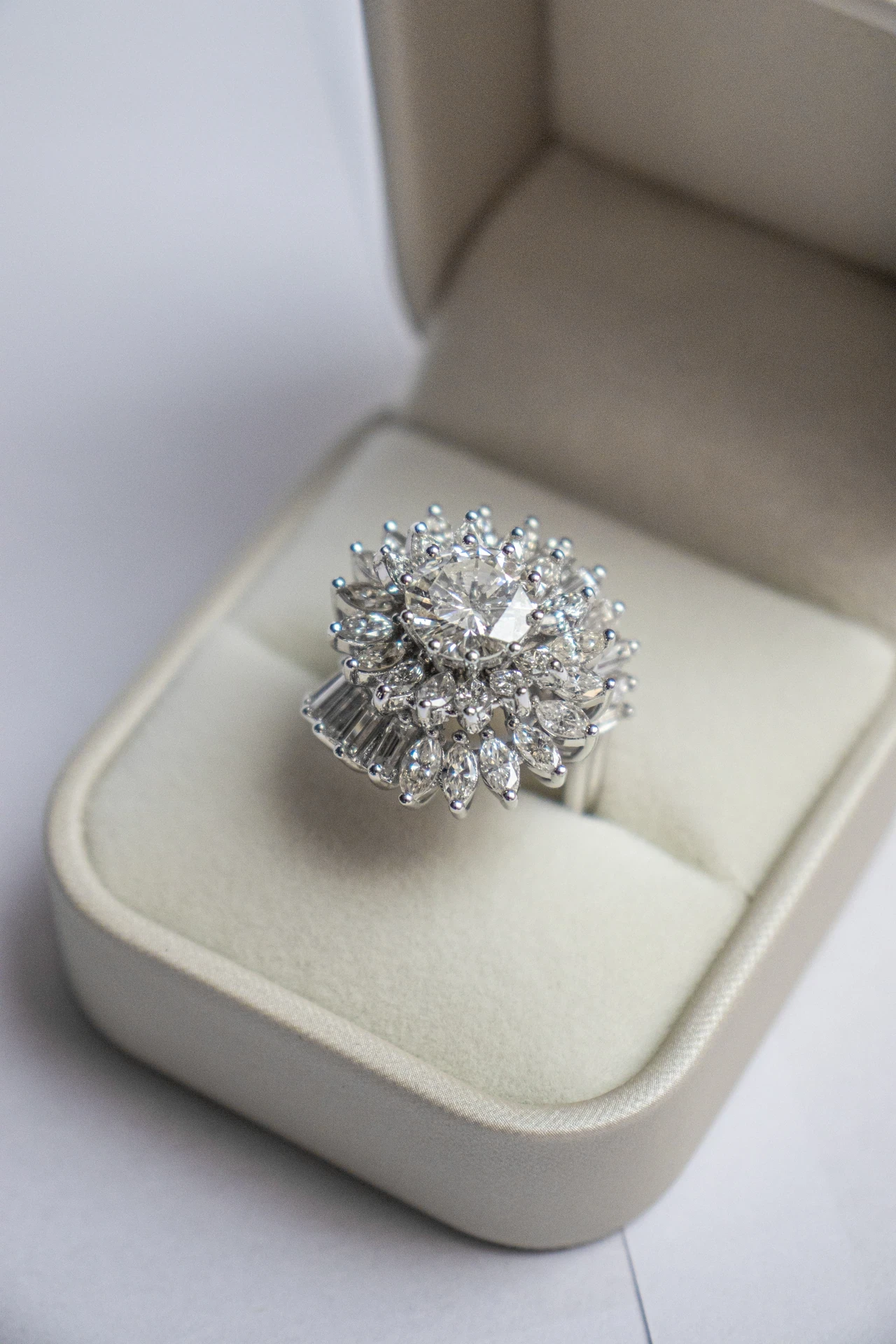
A new beginning for a treasured ring
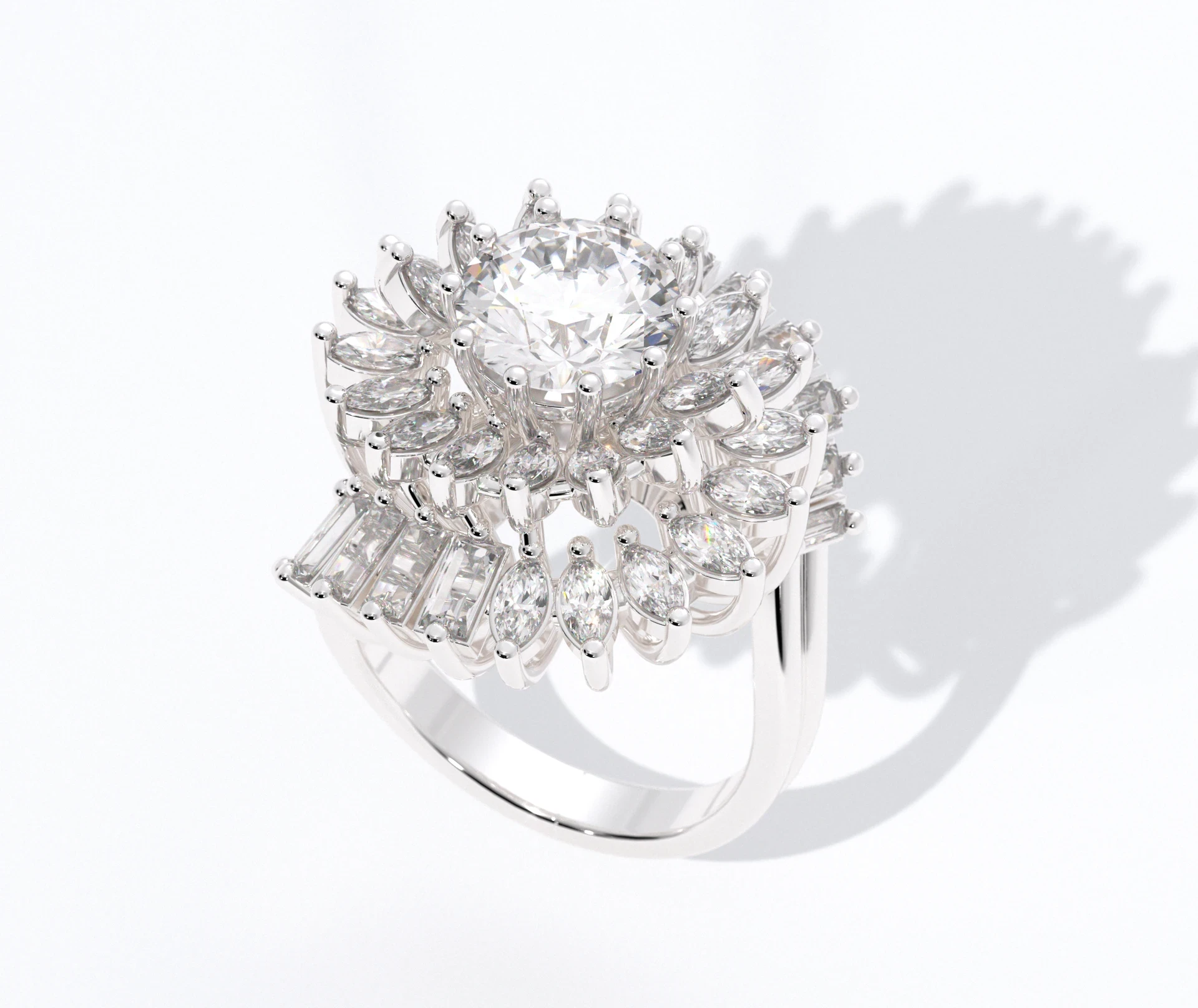
The original ring had begun to crack, but its diamonds still meant a great deal to our customer. We made a new setting in 14-carat white gold around a 2.3-carat centre diamond.
I would like a similar piece ↗It started with a wish
A customer came to us with a ring that held great personal meaning. It had started to crack in several places, so she decided to have a new one made. She wanted to keep its diamonds and, above all, what the piece meant to her.
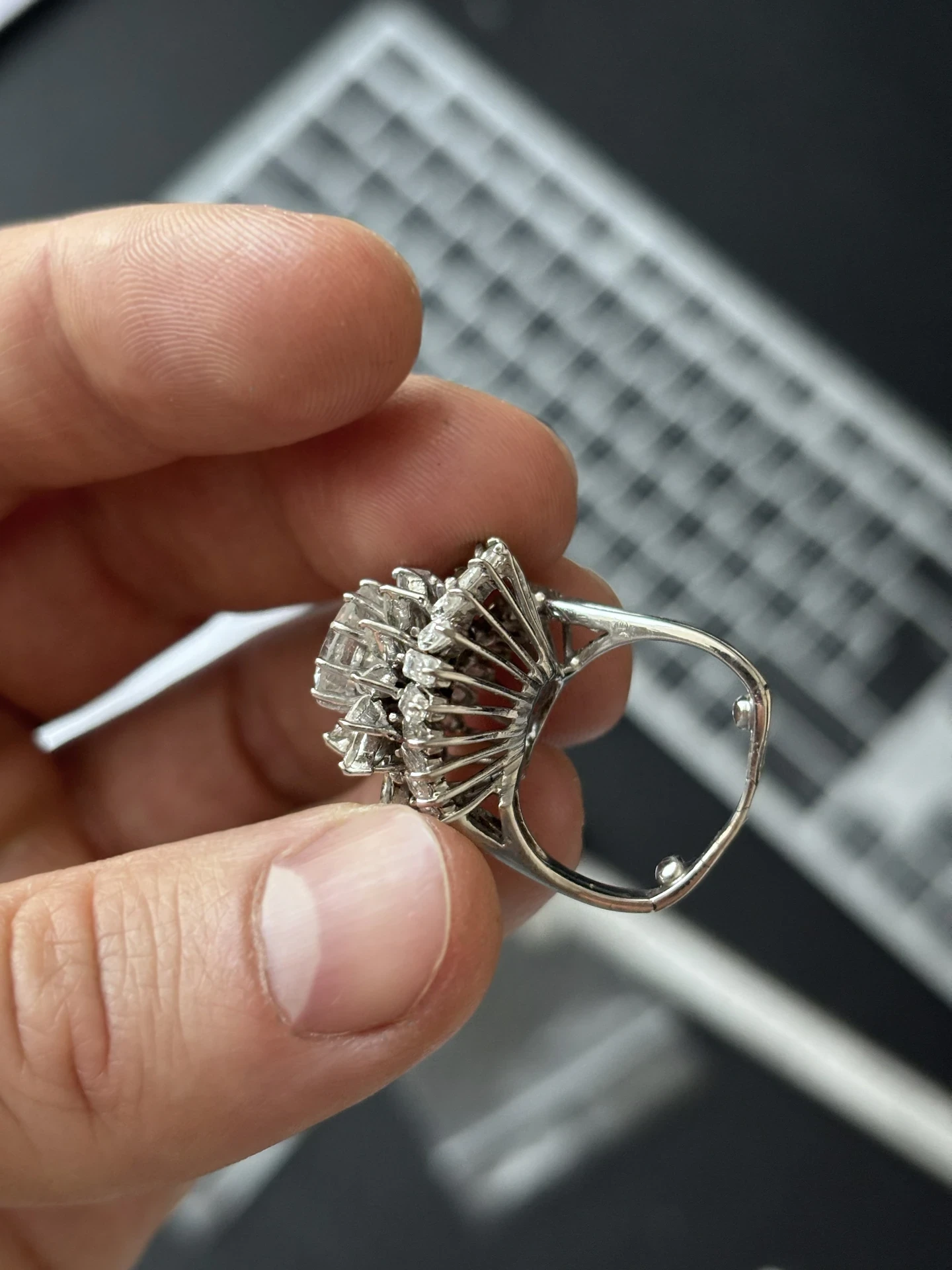
We first took the ring in for a thorough examination. Unfortunately, its poor structural condition was confirmed. The lower part of the shank had cracked in several places. The metal was noticeably porous, with sharp fracture surfaces. In our professional assessment, these defects suggested overheating of the metal and inadequate procedures during the original manufacture.
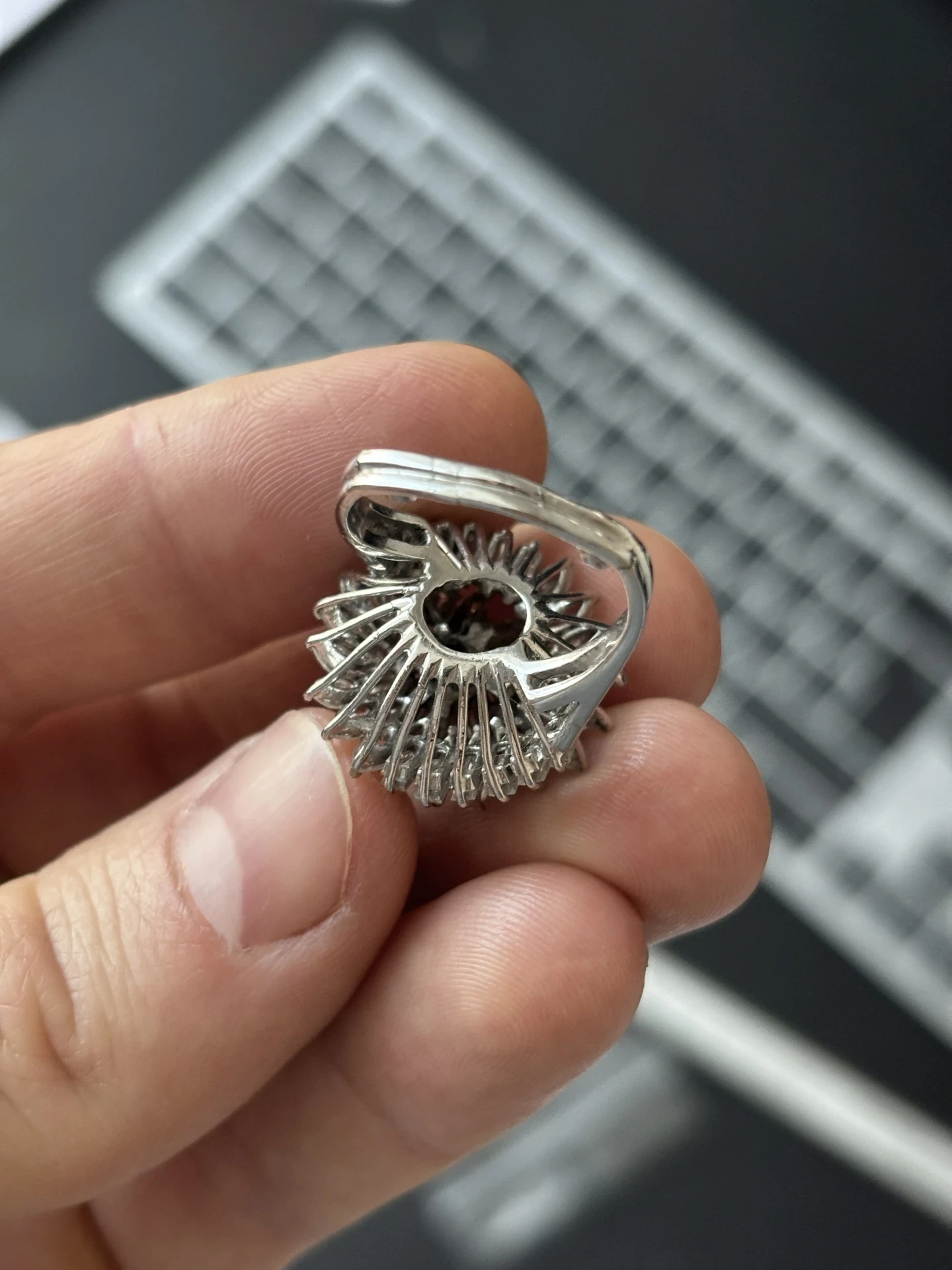
There were problems in the head of the ring too. We found defective soldered joints and solder in places where it should not have been. Some supporting elements were also too thin to hold such a substantial head together over time. The diamonds were at risk of coming loose, and the structure could deteriorate further.
Of course, we also examined the stones themselves. In our assessment, they showed very attractive colours in the D–F range, but their clarity and cut quality were weaker. This also applied to the centre diamond. According to the customer, she had not received certification for either it or the side stones when the ring was originally acquired.
We decided to give the original diamonds a new home: one that would do justice to their beauty and make structural sense.
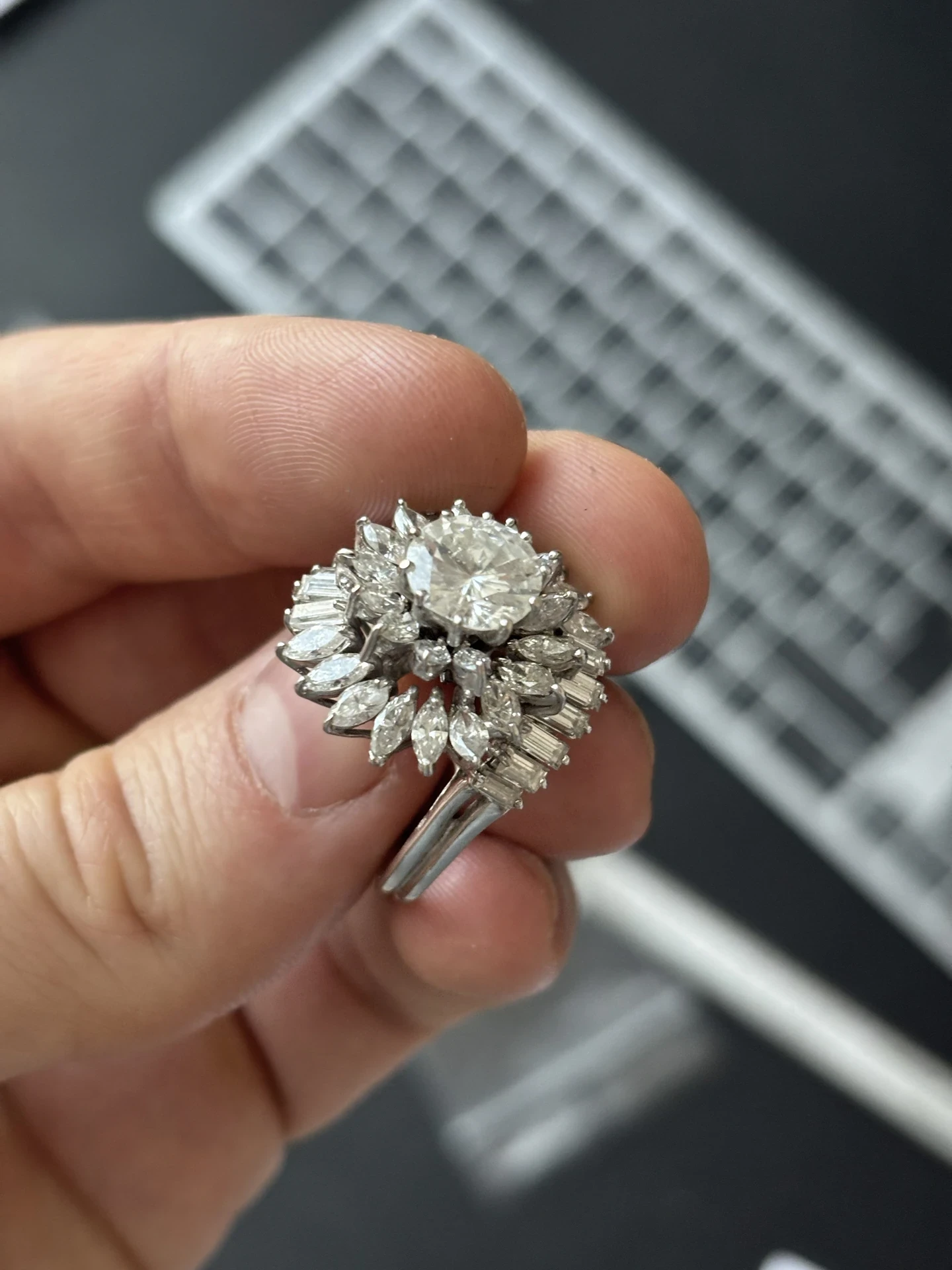
Finding the right solution
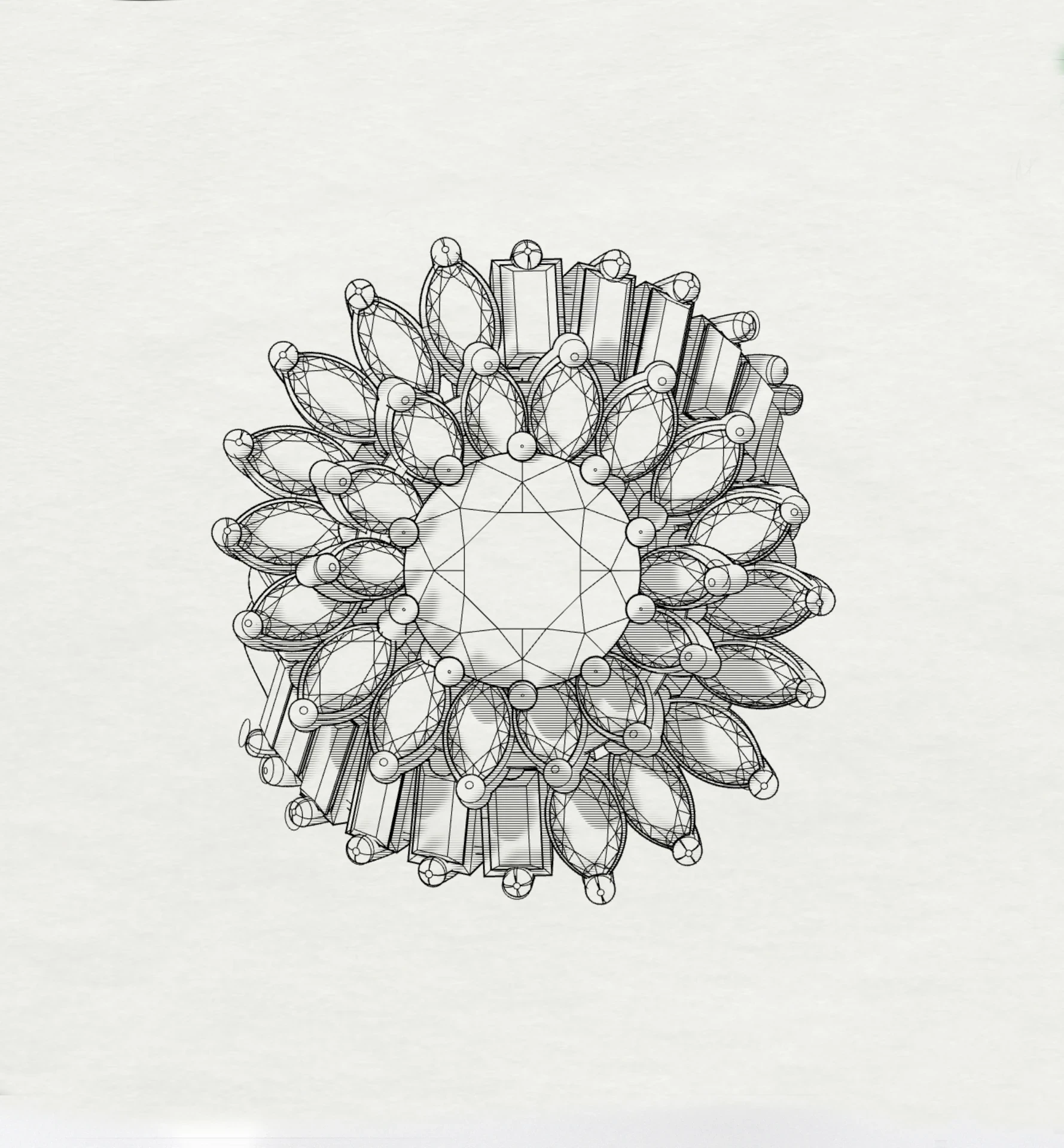
We made the new ring from three separate components. They had to fit together perfectly so that we could use as little solder as possible when joining them. The precision of each component was essential to us.
Once the ring was assembled, we began setting the diamonds. We could not simply make one seat and repeat it. Almost every stone had slightly different dimensions, so each position had to be fitted to its individual diamond with precision to tenths of a millimetre.
The marquise cuts needed particular care. Their pointed ends are vulnerable to chipping during setting, making them more demanding to work with than many other shapes. And yes, even a diamond can crack. Hardness does not mean indestructibility.
After setting the side stones, we set the round 2.3-carat centre diamond that dominates the ring. In a stone of this size, its high colour really stands out, and I think it suits it beautifully.
The finished jewel
We used 14-carat white gold for the new ring and finished it with rhodium plating.
The original diamonds stayed, but they received an entirely new structure. We designed and made it with strength, secure stone setting and decades of wear in mind. What mattered to us was preserving the reason our customer wanted to keep the ring and giving it a new beginning.