
Earring fastenings: what to choose for comfortable everyday wear
Push backs, screw backs, leverbacks or hinged hoops? A good choice starts with fit and ease of use, not a ranking of the safest closures.
These schematic drawings created with AI explain how the fastenings work. They are not photographs of specific DeLoire models.
First, separate the earring's shape from its fastening
Stud, hoop and drop describe an earring's appearance. A push back, screw back or leverback describes how it stays in the ear. The same shape can therefore have different fastenings, and a front photograph alone may not show how to put it on.
Before choosing, look at the back and side views too. Consider the post length, space for the earlobe, back size and overall weight. A delicate-looking earring is not necessarily lightweight. No fastening guarantees protection against loss either: its particular construction, condition and handling all matter.
Push backs: quick to put on, but they must fit the post
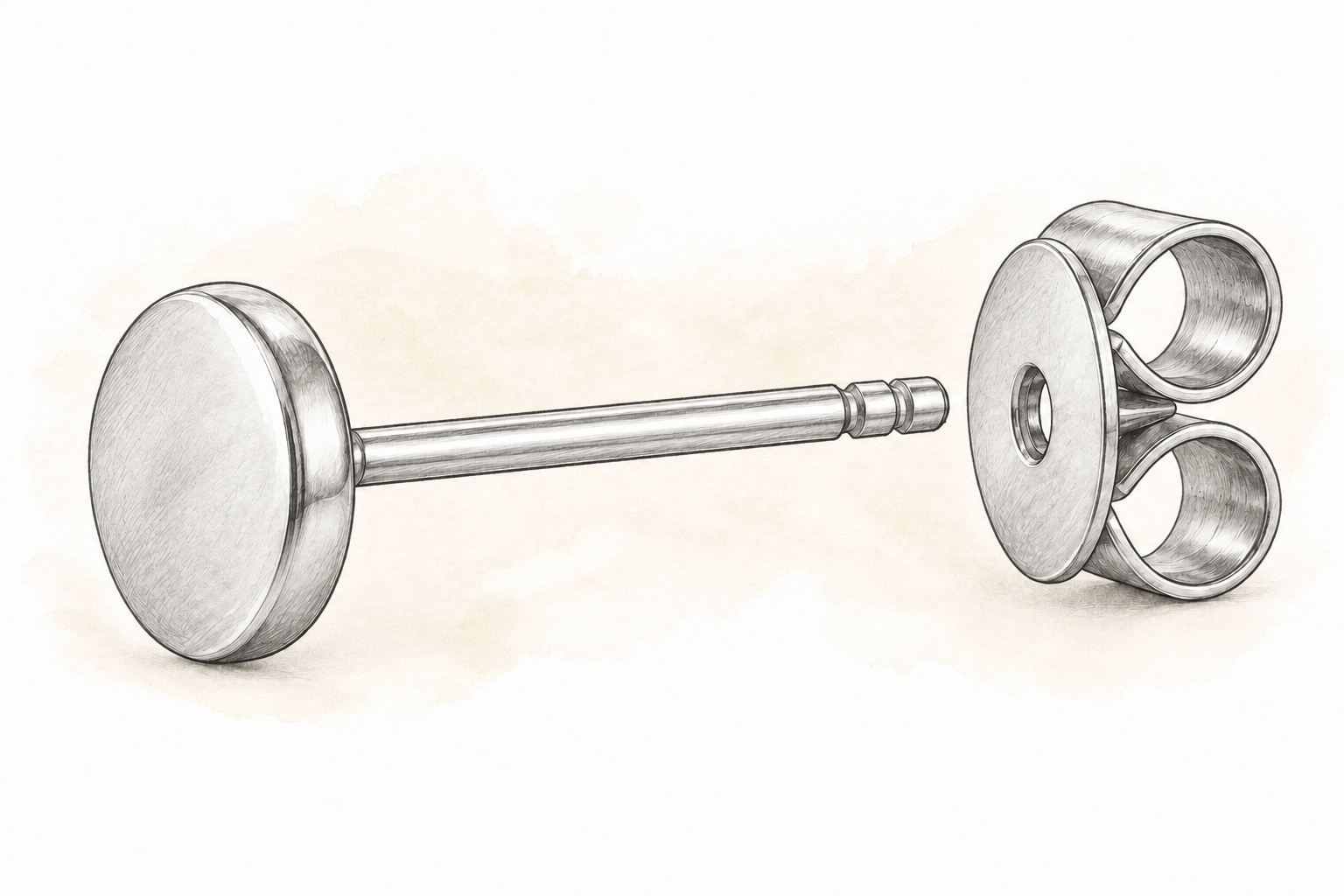
A push back is a removable back that slides onto a straight post, familiar from many studs. A metal friction back holds through friction and usually has curled spring sections. Putting it on is generally quick, which can be useful if you change earrings frequently.
Do not mistake a similar appearance for compatibility. A back from another pair may grip the post differently. You should feel moderate resistance when fitting it, not a need to force it. Do not press the back tightly against your earlobe simply to feel more secure. If it slides off by itself, have the earring checked; squeezing it with your fingers is not a reliable repair.
Screw backs: a thread rather than a simple push fit
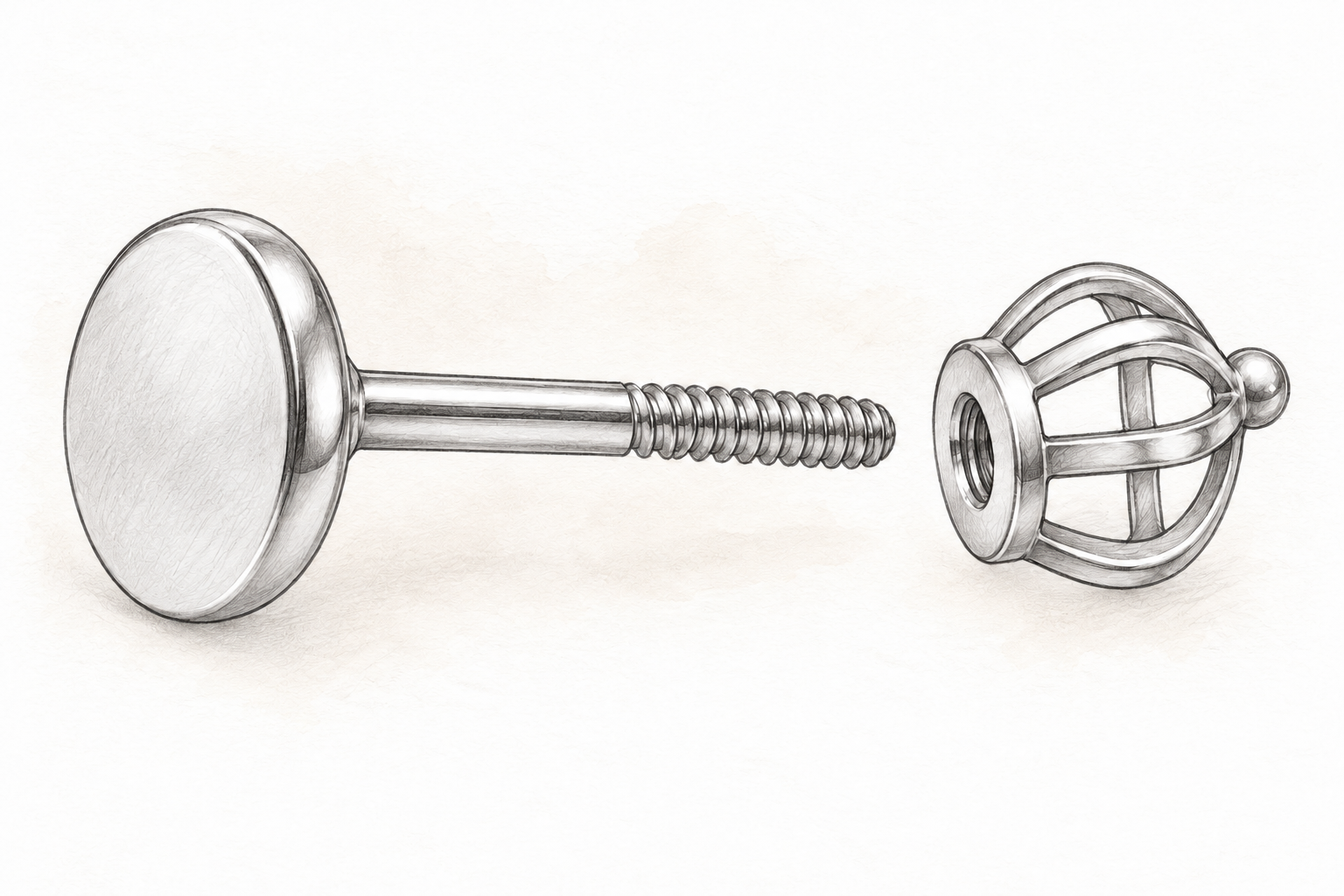
A conventional screw-back fastening pairs a threaded post with a matching threaded back. To remove it, unscrew the back rather than pulling it off sharply. Some people enjoy this way of fastening an earring; others find the small turning movement behind the ear inconvenient.
Try whether you can comfortably hold the front while turning the back. Do not tighten it forcefully against the earlobe. If the thread catches, does not fit or the back spins without engaging, do not force it. Here too, a correctly matched pair of components and regular checks matter more than the name 'screw back' alone.
Leverbacks: a hook with an integrated hinged closure
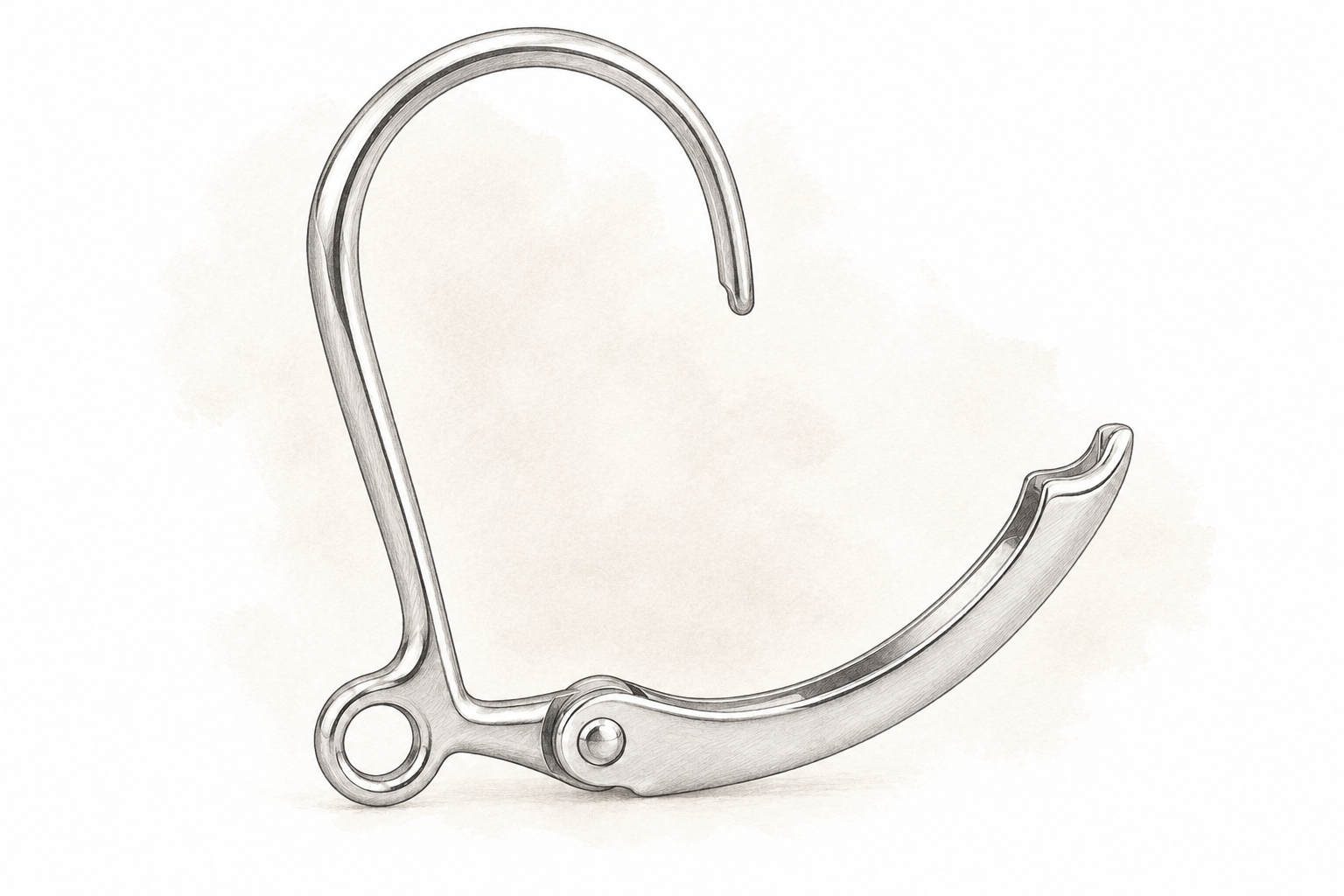
In a leverback design, a curved post or hook passes through the ear and closes against a hinged lever at the back. You do not have to put aside a separate back whenever you remove the earring. Before buying, check that there is enough room between the front and the closed lever.
Terms such as 'patent', 'flap' or 'English fastening' are not used consistently by every retailer. A curved hook closed by a lever is structurally different from a straight post that clicks into an opposing catch. Look at a detailed photograph and a demonstration of the opening action, not just the name.
Hoops: identify the actual closing mechanism
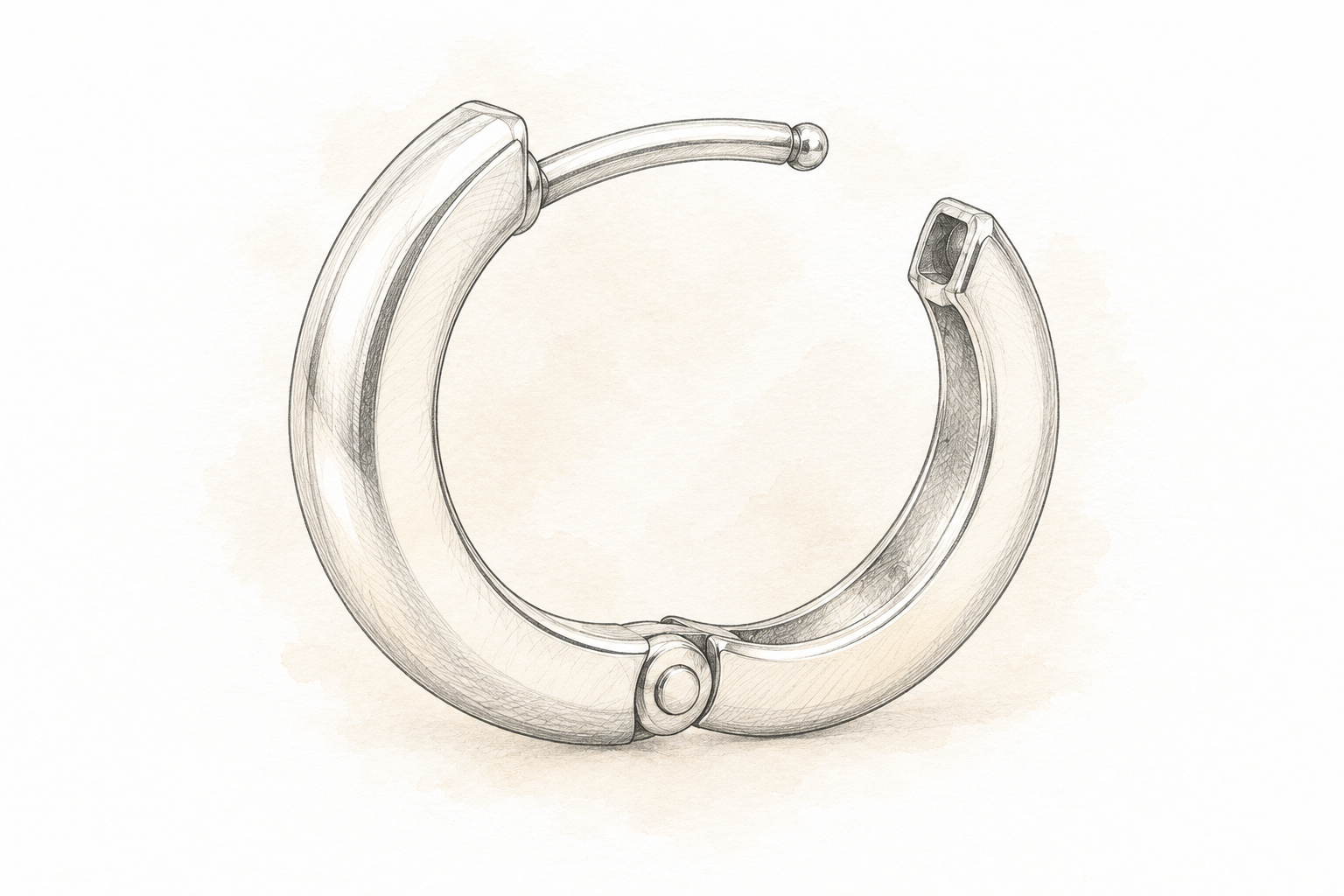
A hoop is a shape, not a single mechanism. Some hoops have a hinge and a post that slots into the opposite part; others use a different construction. With small hoops in particular, first establish where they open and which part to hold.
The closure should work as the manufacturer intended, without twisting the whole hoop. An audible click alone does not replace checking that the parts are properly seated. For comfort, consider the internal diameter too: a small hoop may not leave enough space for your earlobe, even if its size looks ideal in a photograph.
Open hooks: simple handling without a locking closure
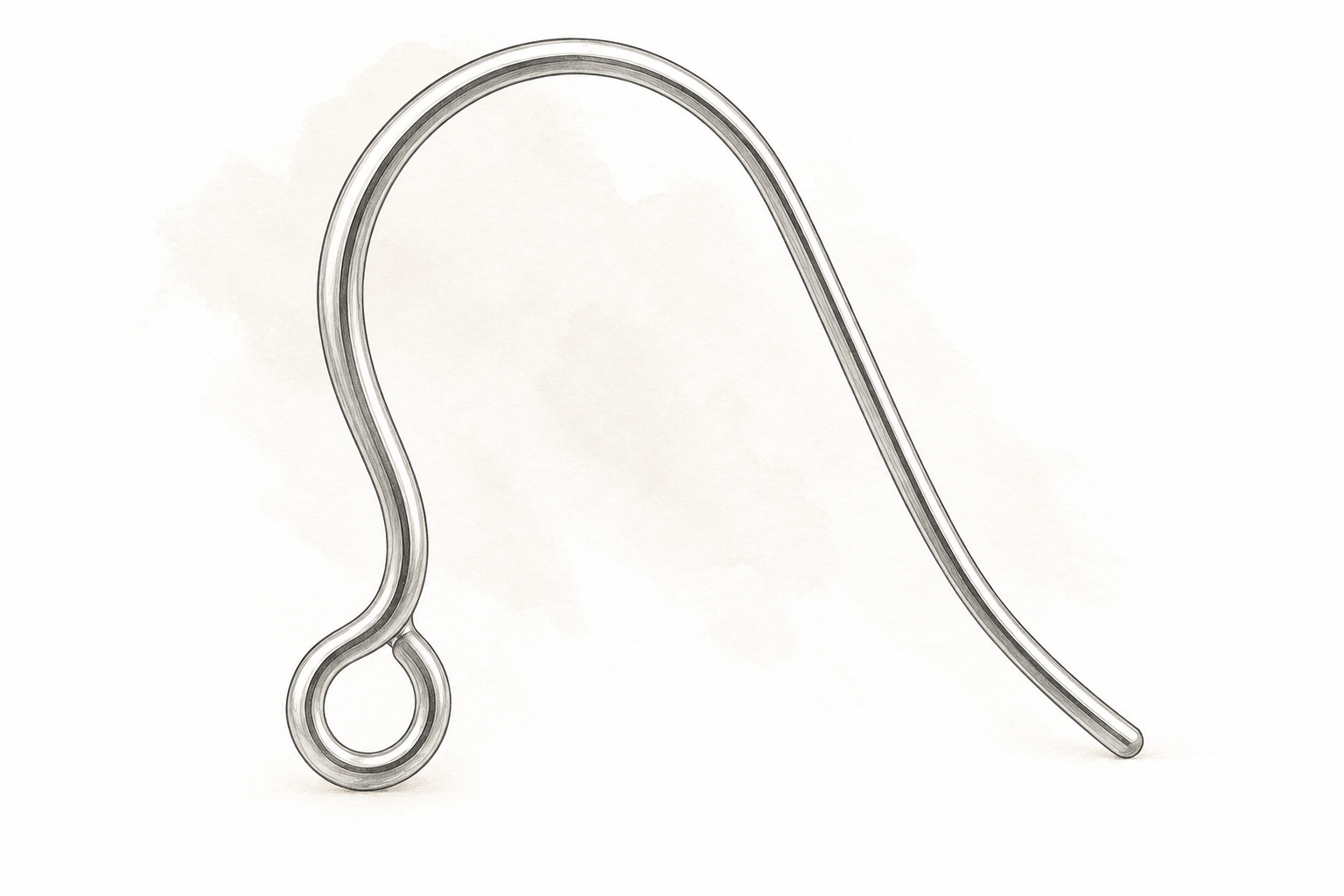
An open ear wire passes through the ear and has no mechanical closure at the back. It allows drop earrings to move freely, but can catch on hair or clothing. A simple construction should therefore not be assumed to provide the same retention as a closed mechanism.
If a particular earring has an additional stopper, use it according to the manufacturer's instructions. Not every universal stopper fits every hook. When choosing, also check how far the earring reaches towards your neck as it moves.
Check comfort in situations from your normal day
Fastening an earring in front of a mirror is only the beginning. When trying it on, turn your head, tuck your hair behind your ear and check contact with your collar. If you regularly wear glasses or headphones, take them into account. With longer earrings, remember contact with your neck and scarf.
- Can you comfortably put on and remove both earrings by yourself?
- Does the back press against you, or does the earring catch during normal movement?
- Are you happy with the weight and the way the earring sits on your ear?
Our tip: think about your morning routine too
If you change earrings frequently, make time to try the fastening properly. A beautiful pair that is frustrating to put on every day can easily become jewellery that stays in a drawer. For us, easy handling matters alongside the view from the front.
When to stop wearing an earring and have the fastening checked
Do not dismiss a change in resistance, a loose back, a wobbly hinge, a bent post or a crack as insignificant. Put the earring aside and consult a jeweller. Do not try to restore its grip by forceful bending at home: you may change the geometry and damage a delicate component.
Tailor care to the whole jewel, including its stones. A general fastening name does not tell you which cleaning methods an earring can tolerate, or whether it is suitable for sleeping or sport. This overview describes conventional jewellery fastenings; it is not guidance for newly pierced ears.
Our tip: compare the backs as well
Place two photographs of your chosen pair side by side: front and back. If the second does not show you how the earring opens or how much room it offers, ask for an explanation before buying. A close-up of the fastening is as useful to a good choice as a close-up of the stone.
When choosing DeLoire earrings, look beyond the stone and shape to the particular fastening. Always check the construction of the specific model you choose. The best choice is one that fits you, that you know how to operate and that you feel confident using.