How to choose an emerald: everything you should know before buying
- Jun 13
- 4 min read
Emerald – a gemstone that doesn't pretend to be perfect
If we had to choose a gemstone with the most distinctive character, the emerald would be one of the first candidates. Its deep green color has fascinated mankind for thousands of years, yet it differs from most gemstones in one crucial way – perfect purity is not the goal.
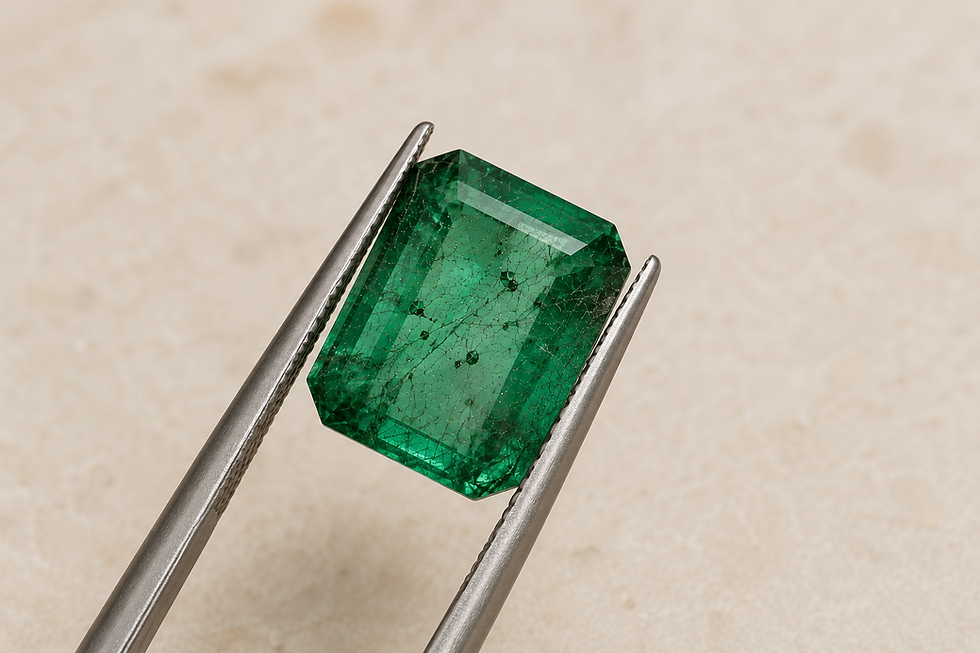
On the contrary. Most natural emeralds contain small internal inclusions and cracks, often called a garden ( jardin ). These are evidence of the natural formation of the stone and give each emerald a unique character, which is why customers seek them out.
In our experience, customers are often concerned about small inclusions because they compare them to diamonds. However, with emeralds, the rules are slightly different – quality and color characteristics are more important than absolute clarity.

Where are the best quality emeralds mined?
The most famous emeralds come from Colombia , which is still considered the source of the most valuable stones in the world. Colombian emeralds are known for their vibrant, deep green color and exceptional brilliance.
Zambia is also a significant producer, where emeralds with a slightly cooler, sometimes even bluish tone are found. Other deposits can be found, for example, in Brazil, Ethiopia or Afghanistan, where we believe we can also find very nice emeralds. The rule on the market has long been that origin largely determines the price.
What colors can emeralds have?
Although most people only imagine a dark green stone, the color range of emeralds is surprisingly wide.
light green emeralds,
medium green emeralds,
deep rich green emeralds,
green stones with a subtle blue tinge,
green stones with a yellowish undertone.
The most valuable emeralds tend to be those with a rich, even green color that is neither too dark nor too light.
Benefits of emerald
1) Unique color
No other gemstone offers exactly this shade of green. A quality emerald is recognizable at first glance.
2) Every stone is an original
Due to natural inclusions, no two emeralds are exactly alike.
3) History and rarity
Emeralds are among the rarest gemstones and have been a symbol of wealth and status for centuries.
Disadvantages of emerald that you should know
1) Brittleness and fissility
Emerald is not a very hard gemstone, it belongs to the beryl group with a hardness of 7.5 on the Mohs scale. Its natural internal structures can cause increased sensitivity to impact. Therefore, we recommend extreme caution, for example with rings that are worn every day.
2) Most emeralds are treated
The vast majority of natural emeralds on the market undergo oiling, which fills in small surface cracks and improves the appearance of the stone. This is not a scam, but a common and historically recognized treatment.
How much does an emerald cost?
The price of an emerald can range from a few thousand crowns to hundreds of thousands of crowns per stone.
It is mainly determined by:
intensity and quality of green color,
the purity of the stone,
size in carats,
origin of emerald,
quality of the cut,
any adjustments.
For example, a beautiful natural emerald of around 1 carat can cost approximately 60,000-90,000 CZK, but the price increases significantly for exceptional stones.
How to choose a quality emerald – our advice
At DeLoire, we have a rule - color should come first . An emerald with a beautiful, vibrant green color will ultimately appear more valuable than a stone that is too pure with a dull hue. In our selection, we always try to avoid milky veils, which are often a sign of a poor quality gemstone.
We also recommend paying attention to whether the stone is natural and what treatments have been performed. For more expensive emeralds, a gemological certificate should be a given. Emeralds are often oiled with cedar oil. These treatments are considered common treatments to achieve a richer color. How much the emerald is oiled is also important when assessing the extent of the oil filling. This oil can dry out and degrade over time, which is why older emeralds may need to be re-oiled. Resin, water glass, or other silicate fillings are problematic. These treatments reduce the value to a minimum.

Our opinion on emeralds
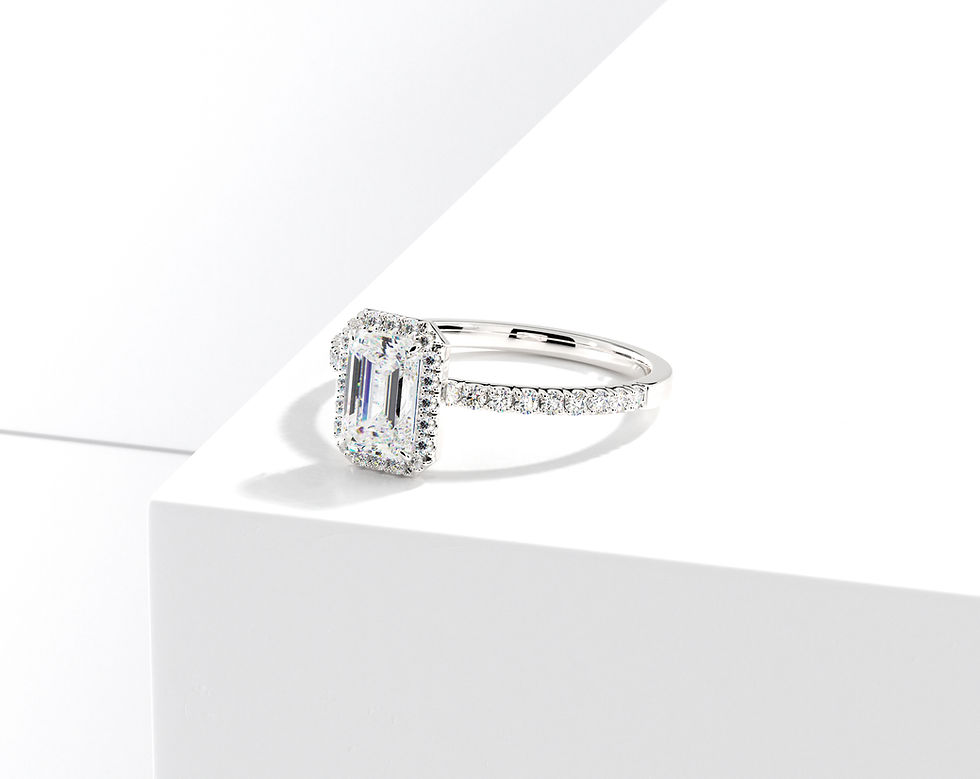
Emerald is not a gemstone for someone looking for absolute technical perfection. It is a stone for those who appreciate its natural origin, unique pattern and inimitable green colour. When chosen correctly, emerald can be one of the most characteristic gemstones in jewellery. Personally, when I design an engagement ring, I always try to adequately outline to the customer that this gemstone is not very suitable for an engagement ring, which is intended for everyday wear. Gemstones in rings are subjected to many times more stress in terms of temperature, abrasion and chemicals. However, if the condition of careful handling is met, no other gemstone can match the green colour of an emerald. Emeralds are supplied to us by our suppliers from all over the world and we are able to provide a wide range of cuts, colour tones and purity.
Radim & Michaela



Comments